Skip to Content

Historical Crests FC Utrecht

Name: ​FC Utrecht
Nickname(s): Utreg
Founded: 1970
Stadium: Galgenwaard
Capacity: 23,750
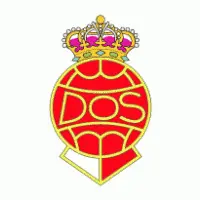
DOS
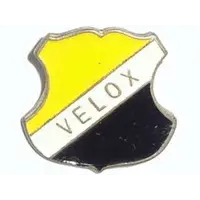
Velox
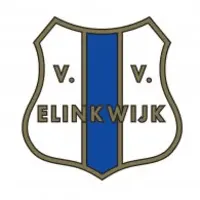
VV Elinkwijk
 1970-1972
1972-1974
1974-1982
1983-1995
1995-2001
2001-2020 
2020-2021 
 2021-Present
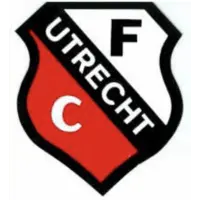
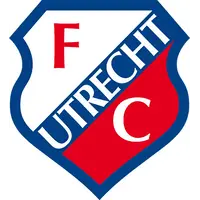
FC Utrecht Crest History
Throughout its history, FC Utrecht's crest has reflected the club's origins as a merger and its strong connection to the city of Utrecht. Founded in 1970 through the merger of DOS, Elinkwijk and Velox, the club immediately sought a visual identity that would represent both its football heritage and the city it was created to serve.
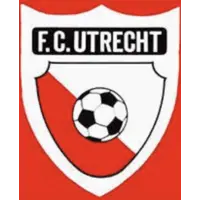
The first FC Utrecht crest, introduced in 1970, featured a shield divided diagonally into red and white, the traditional colours of the city of Utrecht. 
Throughout the 1970s and 1980s, the crest underwent only minor refinements. The basic concept of the red-and-white shield remained unchanged, helping FC Utrecht establish a strong identity despite being one of the younger clubs in Dutch professional football.
During the 1990s, the crest was modernised again to improve its visual impact and commercial appeal. The shield became cleaner, the typography was refined and the overall design adopted a more professional appearance. Despite these updates, the club carefully preserved the elements supporters most strongly identified with: the red-and-white colours and the FCU initials.
A major redesign was introduced in 1995. The badge adopted a more streamlined shield shape, creating a stronger and more contemporary identity. 
The most important modern update arrived in 2001, when the club introduced a refined version of the crest that remains the foundation of its identity today. The redesign simplified the shield, sharpened the typography and improved the balance between the red-and-white sections. The result was a cleaner and more timeless badge that worked effectively across merchandise, media and digital platforms.
The current crest introduced in 2021 continues to feature the iconic red-and-white shield and bold FCU monogram. The colours represent the city of Utrecht, while the shield reflects the club's roots as the unification of three historic local clubs.
FC Utrecht Club History
Founded on 1 July 1970, FC Utrecht was created through the merger of three clubs from the city of Utrecht: DOS, Elinkwijk and Velox. The merger was encouraged by local authorities and football officials who wanted to establish a strong professional club capable of representing Utrecht at the highest level of Dutch football. From its foundation, FC Utrecht became the city's leading football institution and one of the most important clubs outside the traditional Dutch elite.
The club's early years were marked by stability and steady development. During the 1970s, Utrecht built a reputation as a competitive and difficult opponent, regularly finishing in the upper half of the league table. The club also began establishing its strong football culture and passionate supporter base.
FC Utrecht achieved its first major success in 1985, when it won the KNVB Cup for the first time. The victory represented a breakthrough moment and secured the club's place among the most respected teams in Dutch football.
Throughout the 1980s and 1990s, Utrecht became a regular participant in European competitions. The club consistently challenged for European qualification and developed a reputation for producing talented players and entertaining football.
A golden period arrived in the early 2000s. Under coach Foeke Booy, FC Utrecht enjoyed one of the most successful eras in its history. The club won the KNVB Cup in 2003 and 2004, defeating Feyenoord on both occasions. These victories established Utrecht as one of the strongest cup teams in Dutch football.
The success continued in 2004, when Utrecht won the Johan Cruyff Shield, defeating Ajax to claim the first Super Cup in club history. The achievement capped one of the most successful periods the club had ever experienced.
The club also developed a strong reputation for identifying and developing talented players. Over the years, notable footballers such as Dirk Kuyt, Wesley Sneijder, Dries Mertens, Kevin Strootman, Michel Vorm and Rick Kruys either played for or developed through Utrecht before achieving success elsewhere.
One of the defining features of FC Utrecht is its passionate support. The club's home ground, Stadion Galgenwaard, is regarded as one of the most atmospheric stadiums in the Netherlands. The stadium has been closely associated with the club since its formation and has hosted many of the most memorable moments in Utrecht's history.
FC Utrecht's fiercest rivalry is with Ajax, a fixture often fuelled by cultural and regional tensions between Utrecht and Amsterdam. Strong rivalries also exist with Feyenoord, ADO Den Haag and regional opponents from central Netherlands.


FC Utrecht

Your Dynamic Snippet will be displayed here... This message is displayed because you did not provide enough options to retrieve its content.