Skip to Content

Historical Crests Dundee FC

Name: Dundee FC
Nickname(s): ​The Dee
Founded: 1893
Stadium: Dens Park (Dundee)
Capacity: 11,775

1899-1944
1944-1952
1952-1955
1955-1970
1970-1972
1972-1987
1987-2008
2008-2016
2016-2024
2024-Present

Dundee FC Crest History
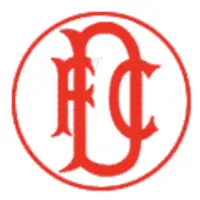
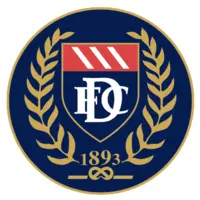
Dundee’s badge history has largely been defined by the simple but distinctive initials “DFC,” which have become synonymous with the club for generations of supporters.
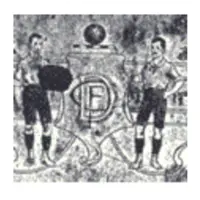
During the early decades of the club’s existence, Dundee used a variety of symbols and lettering styles rather than a single consistent crest. As football branding developed during the mid-twentieth century, the club sought a clearer and more recognisable visual identity.
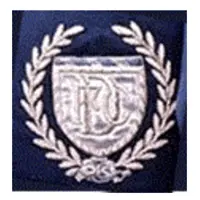
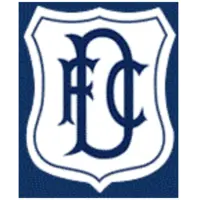
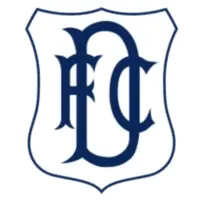
A significant milestone came in 1952 when Dundee began developing a more distinctive badge. This evolution led to the introduction of what would become the club’s most iconic emblem. From 1955 onwards, a simplified “DFC” badge became the central symbol of Dundee Football Club. The elegant intertwined initials created a unique identity that was both modern and instantly recognisable.
The “DFC” monogram quickly became associated with some of the most successful periods in the club’s history, including Dundee’s Scottish League Championship triumph in 1961–62 and the club’s memorable run to the semi-finals of the European Cup in 1963. As a result, the badge became deeply embedded in the club’s heritage.
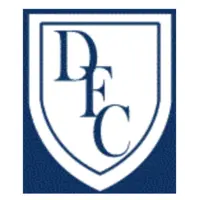
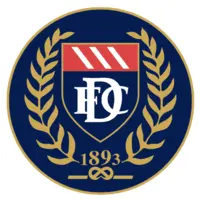
Over the following decades, Dundee experimented with several variations of the design. Different versions included circular badges incorporating the club name around the famous initials, while other adaptations modernised the monogram itself. Despite these changes, the intertwined “DFC” remained at the heart of the club’s identity.
In 1987, Dundee returned to a version that more closely reflected the classic monogram design, recognising the strong affection supporters held for the traditional badge. This restoration reinforced the connection between the crest and the club’s most celebrated achievements.
A further return to tradition occurred in 2008 when Dundee officially reinstated its iconic 1955 badge. The decision was widely welcomed by supporters who viewed the monogram as one of the most distinctive and historic symbols in Scottish football. The reintroduction reaffirmed the importance of the club’s heritage and restored one of its most recognisable visual identities.
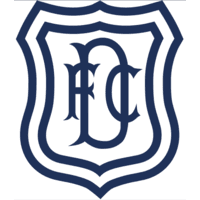
In 2024, Dundee unveiled a refreshed version of the classic crest. The updated design carefully modernised the badge while remaining faithful to the original 1955 concept. Subtle refinements improved clarity and presentation for digital and commercial use, while preserving the famous intertwined “DFC” that generations of supporters had come to identify with the club.

Dundee FC Club History
Dundee Football Club, known affectionately as “The Dee,” has been a cornerstone of Scottish football since its foundation in 1893. The club was formed through the merger of two local sides, Dundee East End and Dundee Our Boys, creating a unified representative for the city. Following its formation, Dundee joined the Scottish Football League and quickly established itself as an important force within the Scottish game.
Since 1899, Dundee has played its home matches at Dens Park. The stadium occupies a unique place in world football due to its proximity to Dundee United’s Tannadice Park. The two grounds are located on the same street and are separated by only a few hundred yards, making them among the closest senior football stadiums anywhere in the world.
The club enjoyed steady success during the first half of the twentieth century, regularly competing in the top division of Scottish football. Dundee’s finest period came during the early 1960s under manager Bob Shankly. In the 1961–62 season, the club won the Scottish League Championship for the first and only time in its history, finishing ahead of Rangers and Celtic. This remains the greatest domestic achievement in Dundee FC’s history.
The league title earned Dundee a place in the 1962–63 European Cup. The club enjoyed a remarkable run in the competition, reaching the semi-finals before eventually being eliminated by AC Milan. To this day, Dundee remains one of only a handful of Scottish clubs to have reached the last four of Europe’s premier club competition.
Dundee added further silverware by winning the Scottish League Cup in 1951–52 and again in 1973–74. The club has also reached several Scottish Cup Finals, although lifting the famous trophy has remained elusive despite a number of memorable cup runs.
One of the defining features of Dundee FC is its rivalry with Dundee United. The two clubs are located on the same street, creating one of football’s most unique local rivalries. Matches between the sides are known as the Dundee Derby and are among the highlights of the Scottish football calendar. While fiercely contested on the pitch, the rivalry is often regarded as more amicable than many other Scottish derbies, particularly when compared with the intensity of the Old Firm rivalry between Celtic and Rangers.
Like many historic clubs, Dundee has experienced periods of both success and hardship. One of the most difficult chapters came in 2003 when the club suffered a severe financial crisis. Burdened by debts of approximately £23 million, Dundee entered administration and faced the genuine threat of collapse. Through a combination of cost-cutting measures, supporter backing and the sale of Dens Park, the club survived and continued its existence.
The following decade brought further challenges and opportunities. In 2012, Dundee gained promotion to the Scottish Premier League following the financial collapse and demotion of Rangers. Although the club returned to the second tier after just one season, the promotion represented an important milestone during a period of rebuilding.
In recent years, Dundee has continued to alternate between the top two divisions of Scottish football while striving to re-establish itself among the country's leading clubs. Despite these fluctuations, the club retains a strong support base and remains an integral part of Scottish football’s heritage.

Dundee FC Pins

Your Dynamic Snippet will be displayed here... This message is displayed because you did not provide enough options to retrieve its content.