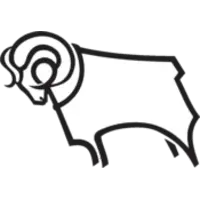
Founded in 1884, Derby County Football Club has used several badges throughout its history, but no symbol has become more closely associated with the club than the ram. Reflecting the club’s famous nickname, “The Rams,” the animal has appeared in one form or another on Derby County crests for almost a century and remains the defining feature of the club’s identity today.
The first official Derby County badge was introduced in 1924. The circular design was divided into sections representing the club, its supporters and the city of Derby. It incorporated civic symbols including a Tudor rose and crown, a buck within a park and a ram’s head, reflecting the club’s close connection to Derbyshire and local heritage. The badge was worn for only a short period before being replaced.
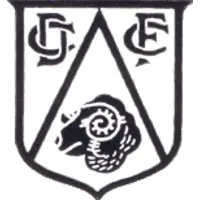
A new crest was introduced in 1934. The design was divided into three sections and prominently featured the ram’s head alongside the letters “DC” (Derby County) and “FC” (Football Club). In 1946, the badge was refined further, retaining the ram while simplifying some of the surrounding elements. Throughout this period, the ram increasingly became the symbol most closely associated with the club.
The most significant change in Derby County’s visual identity came in 1971 with the introduction of a completely new crest. Moving away from traditional heraldic designs, the club adopted a modern and minimalist depiction of a ram. The bold black-and-white design was unlike anything else in English football at the time and quickly became one of the most recognisable club badges in the country.
Over the following decades, the 1971 ram underwent a number of modifications. Various versions featured different orientations, shield backgrounds, circular frames, foundation dates and club lettering. Despite these updates, the core ram design remained unchanged and continued to define Derby County’s identity.
Further refinements during the 1990s and 2000s modernised the badge while preserving its most iconic feature. In 2007, the ram was incorporated into a circular crest that included the club name and foundation year, creating a cleaner and more contemporary appearance.
A major step back towards tradition came in July 2013 when Derby County restored the iconic ram as the club’s full logo. By removing many of the additional design elements introduced over previous decades, the club returned to the simple and distinctive symbol that supporters most closely associated with Derby County.
The ram itself has deep roots in Derbyshire history and local folklore, particularly through the famous tale of the Derby Ram. Over time, the symbol evolved from a heraldic feature on civic badges into one of the most recognisable emblems in English football.
Derby County FC Club History
Derby County Football Club was founded in 1884 as an offshoot of Derbyshire County Cricket Club, with the aim of providing players and supporters with a sporting activity during the winter months. The club quickly became one of the leading teams in the Midlands and was a founding member of the Football League in 1888, helping to establish the first professional league competition in world football.
Derby has played at several grounds throughout its history, most notably the Baseball Ground, which served as the club’s home from 1895 until 1997. The club then moved to Pride Park Stadium, a modern venue that remains its home today.
The Rams enjoyed their first major success in the early twentieth century, reaching three FA Cup Finals before finally lifting the trophy for the first time in 1946 with a victory over Charlton Athletic. The club became a respected force in English football, although its greatest achievements were still to come.
Derby County’s most successful period arrived under the management of Brian Clough and Peter Taylor during the late 1960s and early 1970s. The club won promotion to the First Division in 1969 and secured its first League Championship in 1971–72. Under their leadership, Derby transformed from a Second Division side into one of the strongest teams in England.
A second golden era followed under Dave Mackay, who guided Derby to a second First Division title in 1974–75. These successes established the club among the elite of English football and led to memorable campaigns in European competition.
The following decades brought a mixture of promotions, relegations and financial challenges. Derby remained a prominent club within English football and enjoyed periods in the Premier League during the 1990s and 2000s, including several successful seasons under manager Jim Smith.
One of the club’s most notable modern achievements came in 2007 when Derby won the Championship play-off final to secure promotion to the Premier League. Although their subsequent top-flight campaign proved difficult, the club remained a regular contender in the Championship for much of the following decade.
In 2021, Derby entered administration and faced one of the most challenging periods in its history. Despite financial difficulties and points deductions, the club retained strong support from its fanbase and was later stabilised under new ownership, allowing it to rebuild for the future.
Derby County’s principal rivalry is with Nottingham Forest in the East Midlands Derby, one of the oldest and fiercest rivalries in English football. Strong rivalries also exist with Leicester City and, to a lesser extent, Leeds United.