Skip to Content

Historical Crests Delfino Pescara 1936

Name: Delfino Pescara 1936
Nickname(s): ​I Delfini (The Dolphins)
Founded: 1936
Stadium: ​Stadio Adriatico (Pescara)
Capacity: ​20,515

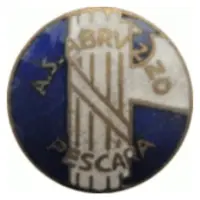
1930-1932
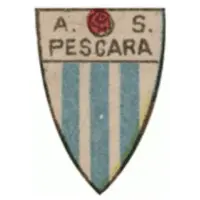
1932-1936
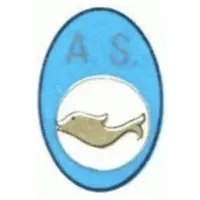
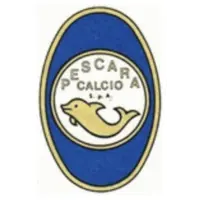
1944-1970
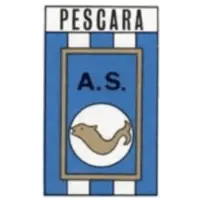
1970-1971
1971-1972
1972-1974
1974-1977
1977-1978
1978-1983
1983-1987
1987-1988
1988-2000
2000-2009
2009-Present

Delfino Pescara Crest History
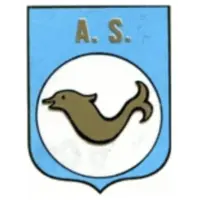
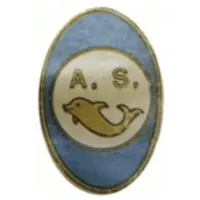
The earliest known crests of Delfino Pescara, used during the 1930s, reflected the traditions of early Italian football. The 1930 badge was a simple emblem focused on the club's initials and identity, while the 1932 version introduced a more structured shield design. These early crests were typical of the era and relied primarily on typography and civic symbolism rather than distinctive mascots or graphic elements.
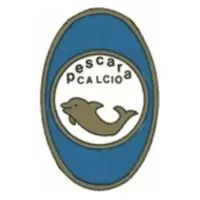
Following the reorganisation of football in the city during the Second World War, a new badge appeared in 1944
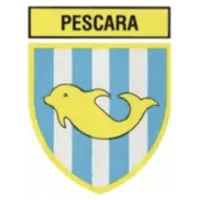
A major period of experimentation began during the 1970s, when the club introduced a remarkable series of different crests in quick succession. The 1970 badge marked the beginning of a more modern era, with simplified graphic elements and greater emphasis on the club's colours.
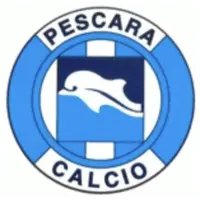
The 1971 and 1972 crests continued this process, introducing new shield formats and typography as the club searched for a stronger and more distinctive visual identity. 
Further redesigns arrived in 1974, 1977 and 1978, creating one of the most visually dynamic periods in the club's history. 
The 1983 crest represented an important step towards a more modern identity. The badge adopted cleaner lines and a more professional appearance while retaining the white-and-blue colours that had become synonymous with Pescara football. 
Another redesign followed in 1987, coinciding with one of the most successful periods in the club's history. The crest accompanied Pescara's rise to Serie A under the management of Zdeněk Zeman and became associated with one of the most exciting teams ever produced by the club.
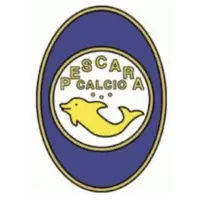
In 1988, Pescara introduced what would become one of its most iconic badges. 
A significant modernisation arrived in 2000, when the club refined the dolphin concept within a more contemporary shield design. The badge combined the traditional white-and-blue colours with a stylised dolphin, creating a visual identity that balanced heritage with modern branding. The redesign helped strengthen the connection between the club and its famous nickname.
Following financial difficulties and organisational changes during the late 2000s, a new crest was introduced in 2009. The badge retained the dolphin as its central feature while adopting a cleaner and more streamlined appearance. The club name and foundation year were incorporated more prominently, creating a modern identity while preserving the symbol most closely associated with Pescara's history.
The 2009 crest also coincided with the club's adoption of the name Delfino Pescara 1936, formally recognising the dolphin as the central symbol of the organisation. This represented the culmination of a process that had begun decades earlier, transforming a maritime emblem into the defining feature of the club's identity.

Delfino Pescara Club History
Founded in 1936 as Società Sportiva Pescara, the club has become the most prominent football institution in the Abruzzo region.
The early decades of the club's existence were spent largely in regional football and the lower national divisions. Pescara gradually developed a reputation as one of the strongest clubs in central Italy, regularly competing in Serie C and working towards establishing itself within the professional game.
A major milestone arrived in 1974, when Pescara achieved promotion to Serie B for the first time in its history. The achievement marked the beginning of a new era and laid the foundations for future success. Throughout the late 1970s and early 1980s, the club became increasingly competitive and established itself as a regular presence in Italy's second division.
The club's first promotion to Serie A arrived in 1977 under the guidance of coach Edmondo Fabbri. For the first time, Pescara found itself competing against the giants of Italian football. Although the stay in the top flight lasted only one season, the promotion represented a historic moment for both the club and the city.
Pescara's most famous period arrived during the late 1980s under legendary coach Zdeněk Zeman. The Czech manager introduced an exciting, attacking style of football that captured attention throughout Italy. During the 1986–87 season, Pescara won promotion to Serie A once again, playing some of the most entertaining football in the country.
The Zeman era also helped launch the careers of several future stars. Among the players who emerged during this period were Gianluca Vialli, Giovanni Stroppa, Massimiliano Allegri and Antonio Pagliuca. Although Pescara remained a relatively small club, it became renowned for developing talented footballers and playing attractive attacking football.
The club enjoyed another memorable chapter during the early 2010s when Zdeněk Zeman returned to the bench. The 2011–12 season produced one of the most exciting teams in modern Italian football. Pescara won the Serie B title while playing spectacular attacking football and scoring more goals than any other team in the division.
That side featured a remarkable collection of future stars, including Marco Verratti, Lorenzo Insigne, Ciro Immobile and Mattia Perin. The team became famous throughout Italy and is still regarded as one of the greatest Serie B sides of the modern era. Promotion to Serie A was secured in style, bringing top-flight football back to Abruzzo.
Like many historic Italian clubs, Pescara experienced organisational changes and financial difficulties during the 2000s and 2010s. The club adopted the name Delfino Pescara 1936, embracing the dolphin symbol that had become central to its identity. 
The club plays its home matches at the Stadio Adriatico-Giovanni Cornacchia, a stadium located near the Adriatic coastline and one of the most recognisable sporting venues in Abruzzo. 
Pescara's most important rivalry is with L'Aquila, a fixture that represents the traditional football rivalry within Abruzzo. Other notable rivalries exist with Teramo, Ascoli and Sambenedettese, reflecting both geographical proximity and decades of competitive encounters across the Italian league system.

Delfino Pescara 1936 Pins

Your Dynamic Snippet will be displayed here... This message is displayed because you did not provide enough options to retrieve its content.