Skip to Content

Historical Crests Cagliari Calcio

Name: Cagliari Calcio
Nickname(s): Gli Isolani (The Islanders)
Founded: ​1920
Stadium: Unipol Domus (Cagliari)
Capacity: ​​16,416

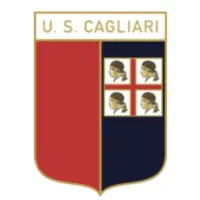
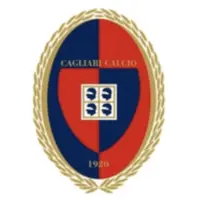
1935-1971
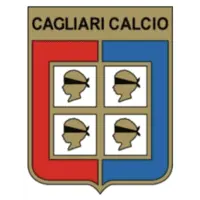
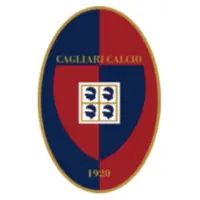
1971-1993
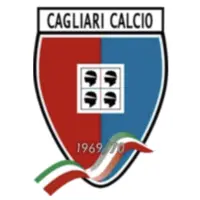
1993-1995
1995-2010
2010-2011
2011-2015
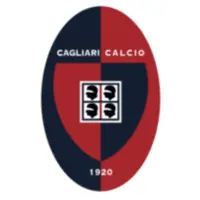
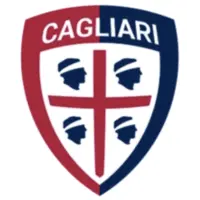
2015-Present

Cagliari Calcio Crest History
Throughout the club's history, every major crest has featured the Flag of Sardinia, making Cagliari one of the few football clubs in Europe whose emblem consistently represents an entire region rather than solely a city.
The earliest known Cagliari crest, used during the 1930s, featured a traditional shield design incorporating the colours and symbols associated with Sardinia. The 1935 badge established a visual tradition that would endure for decades, combining the club's identity with the island's famous Four Moors emblem. This connection immediately positioned Cagliari as the footballing representative of Sardinia.
A major redesign arrived in 1971, shortly after the most successful period in the club's history, which included the historic Serie A title won in 1970. The new crest modernised the club's appearance while retaining the Sardinian flag as its central feature
During the early 1990s, the club introduced another update. The 1993 crest refined the shield shape and typography while preserving the traditional red-and-blue colours and the Four Moors symbol. The design sought to modernise the badge without abandoning the elements supporters most strongly associated with the club.
Only two years later, in 1995, Cagliari introduced a further revision. Although the overall concept remained unchanged, the proportions, borders and graphic details were refined to create a cleaner and more contemporary appearance. The club continued to place the Sardinian flag at the centre of the crest, emphasising its unique role as the island's leading football institution.
A new era of branding began in 2010 when the club unveiled another redesigned badge. This version featured a more modern interpretation of the traditional elements, with updated typography and shield proportions intended to improve visibility across merchandising and digital media. While the design evolved, the Four Moors and the club's red-and-blue colours remained central to the identity.
The following year, 2011, saw further adjustments to the badge. Rather than introducing a completely new crest, the club refined the existing design, improving its balance and graphic consistency while preserving the symbols that had defined Cagliari for generations.
The most significant modern redesign arrived in June 2015. The club adopted the current crest, an elegant Old French-style escutcheon divided into red and blue halves. The club's name appears prominently in white above the Sardinian flag, creating a cleaner and more sophisticated composition. Most importantly, the Four Moors were updated to reflect the official Sardinian flag.
For the first time in the club's history, the Moorish heads were turned to the right, aligning them with the official version of the Sardinian flag adopted in 1992. Previous Cagliari badges had continued to use the older orientation, making the 2015 redesign both a modernisation and a correction of historical symbolism. The update reinforced the club's commitment to representing Sardinian identity as accurately as possible.

Cagliari Calcio Club History
Founded in 1920 in the city of Cagliari, the club has become a symbol of Sardinian identity and pride, representing the island at the highest levels of Italian football for much of its existence. 
From its foundation, the club adopted the colours of the city of Cagliari: red and blue. These colours are derived from the city's stemma (coat of arms) and remain central to the club's identity. The red elements originate from the coat of arms of the House of Savoy, the ruling family of the former Kingdom of Sardinia and later the Kingdom of Italy. The blue represents the sky and sea surrounding the city, while also recalling the historic walled district known as Castello. Because of the distinctive red-and-blue halves traditionally worn on their shirts, the club became known as the Rossoblù ("The Red and Blues"), a nickname that remains widely used today.
As the principal football club of Sardinia, Cagliari developed a unique position within Italian football. Unlike clubs from mainland Italy, Cagliari came to represent an entire island rather than simply a single city. This status earned the team the nickname Gli Isolani ("The Islanders"), reflecting the special bond between the club and the people of Sardinia.
The greatest period in the club's history arrived during the late 1960s and early 1970s. Led by legendary striker Gigi Riva, widely regarded as the greatest player in the club's history, Cagliari achieved one of the most remarkable triumphs in Italian football. In the 1969–70 season, the club won its first and only Serie A title, becoming Italian champions for the first time.
The championship was extraordinary not only because it was Cagliari's first league title, but also because it represented one of the rare occasions that a club from outside Italy's traditional football centres captured the Scudetto. Riva's goals and leadership transformed the team into a national force, while the success provided Sardinia with one of the proudest moments in its sporting history.
The legacy of Gigi Riva extends far beyond the championship-winning season. He remains the club's greatest icon and is revered throughout Sardinia as a symbol of loyalty and excellence. Despite receiving opportunities to join larger clubs, Riva remained committed to Cagliari and helped establish the club's enduring identity.
In the modern era, Cagliari has remained a familiar presence in Serie A and continues to serve as the flagship football club of Sardinia. The club has consistently sought to balance competitiveness with its strong regional identity, maintaining its status as one of Italy's most distinctive football institutions.
Cagliari traditionally played its home matches at the historic Stadio Sant'Elia before moving to newer facilities during redevelopment projects. The club's supporters are renowned for their passion and for the unique atmosphere they create, reflecting the strong connection between the team and the island community.
Cagliari's most notable rivalry is with Palermo FC in the Derby delle Isole ("Island Derby"). The fixture pits the two largest islands in Italy, Sardinia and Sicily, against one another and carries significant regional pride. Matches between the clubs are among the most distinctive rivalries in southern Italian football.
Another important rivalry exists with SEF Torres 1903, one of Sardinia's oldest football clubs. Although the two sides have not always competed in the same division, the fixture remains the principal intra-island rivalry and reflects the historic competition between the northern and southern parts of Sardinia.

Cagliari Calcio Pins

Your Dynamic Snippet will be displayed here... This message is displayed because you did not provide enough options to retrieve its content.