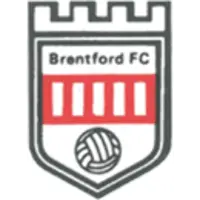
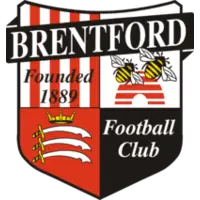
Historical Crests Brentford FC
Name: Brentford FC
Nickname(s): The Bees
Founded: 1889
Stadium: Griffin Park (London)
Capacity: 12,763
Brentford FC Crest History
Founded in 1889, Brentford Football Club has used a variety of badges throughout its history, but no symbol has become more closely associated with the club than the bee. Reflecting the club’s famous nickname, “The Bees,” the bee has evolved from a small feature within earlier crests into the centrepiece of Brentford’s modern identity and remains the defining element of the club’s badge today.
The origins of Brentford’s nickname date back to the 1890s when a group of students from Borough Road College attended a match to support their friend Joseph Gettins. Their chant of “Buck Up Bs” was misheard by journalists as “Buck Up Bees,” leading to the nickname that has remained with the club ever since. Over time, the bee became the natural symbol of Brentford Football Club and an increasingly important part of its visual identity.
During the club’s early decades, Brentford did not consistently wear a formal crest on its playing shirts. Like many English clubs of the period, the team often played without an embroidered badge or occasionally used simple monograms and civic symbols associated with the local area.
A significant development came during the twentieth century when Brentford began incorporating heraldic and civic elements into its identity. Various designs featured references to the borough of Brentford and Chiswick, while some versions included bees alongside traditional shield-based layouts. These badges reflected both the club’s local roots and its growing footballing reputation.
One of the most recognisable crests used by Brentfordm introduced in 1994, featured multiple bees arranged within a shield, surrounded by the club name and colours. This design helped strengthen the connection between the club and its nickname while providing a distinctive identity that supporters embraced for several decades.
A major transformation came in 2017 when Brentford unveiled a completely redesigned crest. The new badge adopted a clean and modern double-roundel design, featuring the club name and foundation year, 1889, in white lettering on a red circular background. At the centre of the crest sits a large, detailed bee, creating a bold and instantly recognisable identity. The redesign was intended to improve clarity, strengthen the club’s visual branding and provide a more effective badge for use across digital and commercial platforms.
The 2017 crest quickly became one of the most admired modern badges in English football. By simplifying the design and placing the bee at the centre, Brentford created a strong visual identity that reflects both the club’s history and its contemporary ambitions. The circular shape also distinguishes Brentford from many clubs that continue to rely on traditional shield-based crests.
Brentford FC Club History
Brentford Football Club was founded in 1889 in West London and emerged from discussions among members of the Brentford Rowing Club, who wanted a winter sport to occupy the off-season. Football was chosen ahead of rugby, and the newly formed club quickly became an important part of the local sporting community.
During its early years, Brentford competed in regional and amateur competitions across London and the South East. The club steadily developed its reputation and joined the Southern League in 1896, one of the strongest competitions outside the Football League at the time. Brentford’s progress continued, and in 1920 the club became a founder member of the newly created Football League Third Division, marking the beginning of its long association with the Football League.
A major milestone came in 1904 when Brentford moved to Griffin Park, a stadium that would serve as the club’s home for 116 years. Griffin Park became one of the most distinctive grounds in English football, famous for having a pub on each corner and for its close connection to the local community.
The 1930s are widely regarded as Brentford’s first golden era. Under manager Harry Curtis, the club enjoyed unprecedented success, winning promotion from the Third Division in 1933 and from the Second Division in 1935. Brentford reached the top flight of English football for the first time in its history and quickly established itself as a competitive First Division club. The team achieved its highest-ever league finish of fifth place in the 1935–36 season, a record that still stands today.
Following the Second World War, Brentford experienced a gradual decline and spent much of the post-war period moving between the third and fourth tiers of English football. Despite occasional promotion campaigns and memorable cup runs, the club struggled to regain its place among the country's leading teams and often faced financial challenges.
The late twentieth century brought a mixture of successes and setbacks. Brentford won lower-division titles and secured several promotions, but the club also suffered relegations and narrowly missed opportunities to reach higher divisions. Throughout these years, Brentford developed a reputation as a resilient community club with a loyal supporter base.
A transformative period began in 2006 when supporter Matthew Benham became increasingly involved with the club. After taking full ownership in 2012, Benham introduced a data-driven recruitment and analytics model that became one of the most innovative approaches in English football. Brentford consistently identified undervalued players, developed talent and competed successfully against clubs with significantly larger budgets.
The club's modern rise culminated in the 2020–21 season, when Brentford defeated Swansea City in the Championship play-off final at Wembley Stadium to secure promotion to the Premier League for the first time. The achievement ended a 74-year absence from the top flight and represented one of the greatest moments in the club’s history.
Another landmark came in 2020 when Brentford left Griffin Park and moved to the Gtech Community Stadium, a modern venue located a short distance from their historic home. The move provided improved facilities and greater opportunities for growth while ensuring the club remained rooted within its local community.
Under manager Thomas Frank, Brentford quickly established itself as a competitive Premier League club. Despite operating with one of the league’s smaller budgets, the club earned widespread praise for its intelligent recruitment strategy, attacking style of play and ability to compete with many of England’s biggest teams.
Brentford’s principal rivalry is with Queens Park Rangers in the West London Derby. Strong rivalries also exist with Fulham and Chelsea, reflecting the club’s position within West London’s unique football landscape.
Brentford FC pin
Your Dynamic Snippet will be displayed here... This message is displayed because you did not provide enough options to retrieve its content.