Skip to Content

Historical Crests Bologna FC 1909

Name: ​Bologna FC 1909
Nickname(s): I Rossoblù (The Red and Blues)
Founded: 1909
Stadium: Stadio Renato Dall’Ara (Bologna)
Capacity: 38,279

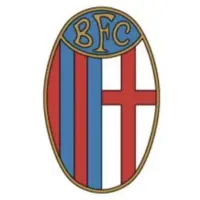
1946-1991
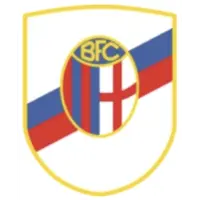
1991-1993
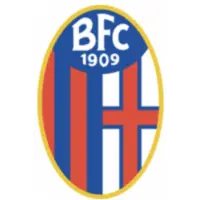
1993-2018
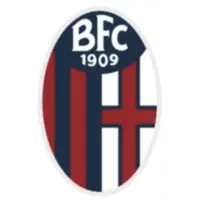
2018-Present

Bologna FC Crest History
From its earliest years, Bologna adopted the colours red and blue, which were taken directly from the official colours of the city of Bologna. These colours quickly became central to the club's identity and gave rise to the nickname Rossoblù ("The Red and Blues"). The red-and-blue stripes that define Bologna's famous shirts have also been a constant feature of the club's crest, creating a strong visual link between the badge and the team on the pitch.
The club's earliest emblems featured simple shield designs that incorporated the initials of the club alongside the city's colours. Even in these formative years, Bologna sought to emphasise its civic identity rather than relying solely on football symbolism. This approach established a tradition that would continue throughout the club's history.
One of the most important elements of Bologna's visual identity is the Cross of Saint George, a red cross on a white background. This symbol appears on both the flag and the coat of arms of the city of Bologna and has been incorporated into the club's crest for generations. By including the cross, Bologna FC strengthened its connection to the city and reinforced the idea that the club served as a sporting representative of Bologna itself.
By the latter half of the twentieth century, Bologna had settled on the oval-shaped crest that supporters recognise today. The badge typically featured the initials "BFC" at the top, the Cross of Saint George in one section and the famous red-and-blue vertical stripes in the other. The foundation year, 1909, was often included at the bottom, emphasising the club's long and distinguished history.
The modern crest continues to follow this historic formula. The oval shape encloses the initials "BFC 1909" at the top, while the lower section is divided between the red-and-blue stripes and the Cross of Saint George. The design successfully combines civic symbolism and football identity in a manner that has remained relevant for more than a century.

Bologna FC Club History
Founded on 3 October 1909 in the city of Bologna, the club emerged through the efforts of Austrian football pioneer Emilio Arnstein and a group of local enthusiasts who sought to establish a major football institution in Emilia-Romagna. 
From its earliest years, Bologna adopted the red and blue colours of the city, earning the nickname Rossoblù ("The Red and Blues"). These colours have remained central to the club's identity ever since and are reflected in both the team's famous shirts and its crest. 
The first golden era of Bologna football arrived during the 1920s and 1930s. Under the presidency of Renato Dall'Ara, one of the most influential figures in the club's history, Bologna established itself as a dominant force in Italian football. The club won multiple national championships and gained a reputation for combining tactical sophistication with technical quality. During this period, Bologna became known internationally as one of Europe's strongest teams.
A defining moment came in 1937 when Bologna won the prestigious Paris International Tournament, defeating some of the leading clubs in Europe. Following the triumph, the French press famously described Bologna as "Lo squadrone che tremare il mondo fa" ("The team that makes the world tremble"), a phrase that remains associated with the club to this day.
Bologna's final Serie A title came during the 1963–64 season. Led by players such as Giacomo Bulgarelli and managed by Fulvio Bernardini, Bologna defeated Inter Milan in a championship play-off to secure its seventh Italian league title. The victory remains one of the most celebrated moments in the club's history.
The 1990s brought renewed optimism. Bologna returned to Serie A and enjoyed a number of successful campaigns, including qualification for European competition. During this era, players such as Giuseppe Signori became club icons and helped re-establish Bologna among Italy's leading teams.
Bologna plays its home matches at the Stadio Renato Dall'Ara, named after the legendary president who oversaw the club's most successful period. The stadium has been the club's home since 1927 and remains one of the most historic venues in Italian football.
The club's most important rivalry is with ACF Fiorentina. Matches between the two sides are known as the Derby dell'Appennino, named after the Apennine Mountains that separate Bologna and Florence. The rivalry is one of the oldest and most passionate in central Italy, reflecting both geographical proximity and decades of competitive encounters.
Other notable rivalries exist with Parma Calcio 1913 and Modena FC, fixtures that carry significant regional importance within Emilia-Romagna. These matches often attract considerable interest and contribute to the club's strong local identity.

Bologna FC

Your Dynamic Snippet will be displayed here... This message is displayed because you did not provide enough options to retrieve its content.