Historical Crests Atalanta B.C.
Name: Atalanta B.C.
Nickname(s): La Dea (The Goddess)
Founded: 1907
Stadium: Gewiss Stadium (Bergamo)
Capacity: 21,747
Atalanta BC Crest History
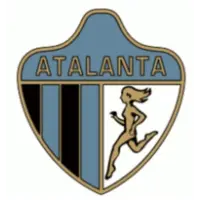
Atalanta's badge is built around the figure of Atalanta, the legendary Greek huntress and athlete from whom the club takes both its name and its famous nickname, La Dea ("The Goddess"). Over the course of its history, the club has used five major crests, all of which have incorporated some combination of the club's name, colours and, since 1963, the image of Atalanta herself.
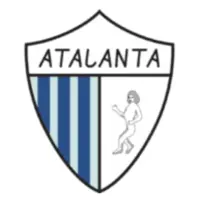
The club's earliest crest dates back to 1907. It featured a traditional shield design with the name "Atalanta" displayed at the top. The left side contained the club's original black-and-white stripes, while the right side incorporated a blue field. This badge reflected the visual conventions of early Italian football and established the colours that would define the club's identity during its formative years.
For several decades, variations of this shield remained in use. The first three major Atalanta crests all followed a similar structure: a shield bearing the club's name at the top, coloured stripes on one side and a symbolic representation on the other. As the club grew in stature, the crest evolved to reflect its increasingly distinct identity.
A major turning point arrived in 1963 following Atalanta's historic victory in the Coppa Italia, still the club's only major domestic trophy. To commemorate this achievement and modernise the club's image, a new crest was introduced. The shield retained the familiar structure but replaced the earlier symbolism with a depiction of a running female figure representing Atalanta from Greek mythology. The club's now-famous black-and-blue stripes also became prominent within the design. This marked the first time the mythological heroine appeared on the club's badge, beginning a tradition that continues to this day.
During the 1970s, the crest was revised once again. The colours and artistic representation of Atalanta were updated, but the overall shield shape introduced in 1963 remained intact. The running figure continued to symbolise speed, athleticism and determination, qualities associated both with the mythological Atalanta and the football club itself.
The most dramatic redesign in the club's history occurred in 1984. For the first time, the traditional shield was abandoned in favour of a circular design. The club's name disappeared entirely from the badge, as did the full body of the running figure. In its place appeared the now-famous white silhouette of Atalanta's head and flowing hair. Set against a black-and-blue background and enclosed by concentric white, black and golden-yellow circles, this design became one of the most iconic crests in Italian football.
The 1984 badge also introduced a symbolic element rarely recognised outside Bergamo. While black, blue and white were retained as the club's colours, the golden-yellow ring referenced the golden apples from Greek mythology. According to legend, Atalanta was defeated in a footrace by Hippomenes, who distracted her by tossing golden apples along the course. The addition of yellow therefore connected the crest even more closely to the myth from which the club derives its name.
Although supporters embraced the 1984 design, the club sought a badge that combined modern aesthetics with clearer identification. As a result, a new crest was introduced in 1993. This version incorporated the famous profile from the 1984 badge while restoring the club's name and foundation year. The yellow circle was removed, and Atalanta's head was tilted forward to create a greater sense of movement and dynamism. The profile was placed within an oval featuring the same black-and-blue split background, while "ATALANTA" appeared above and "1907" below.
The 1993 crest quickly became one of the most recognisable badges in European football and remains the foundation of the club's visual identity today. Minor refinements have been made over the years, particularly to improve digital reproduction and branding consistency, but the overall concept has remained unchanged.
The modern crest features the white profile of Atalanta with her flowing hair sweeping backwards against a black background. The oval shape, club name and foundation year frame the image, while the black-and-blue colours reinforce the identity of Bergamo's most successful football club. The design is both elegant and instantly recognisable, reflecting a rare balance between mythology and modern football branding.
Atalanta BC Club History
Founded in 1907 by a group of students in Bergamo, Lombardy, the club takes its name from Atalanta, the legendary heroine of Greek mythology, and is affectionately known by several nicknames. The most famous is La Dea ("The Goddess"), a reference to the mythological figure depicted on the club's crest. Atalanta is also known as I Nerazzurri ("The Black and Blues") because of its colours, and Gli Orobici, a reference to the Orobic Alps that surround the Bergamo region.
The club achieved one of the greatest moments in its history in 1962–63 when it won the Coppa Italia. Defeating Torino FC in the final, Atalanta secured the first major trophy in its history. The victory remains one of the proudest achievements in the club's history and helped establish Atalanta as a serious force within Italian football.
Over the following decades, Atalanta became widely known as Regina delle Provinciali ("Queen of the Provincial Clubs"). The nickname reflects the club's remarkable consistency compared with other Italian teams not based in regional capitals. Despite competing against clubs from cities such as Milan, Rome, Turin and Naples, Atalanta repeatedly demonstrated an ability to survive and thrive at the highest level.
Although Atalanta enjoyed periods of success throughout the twentieth century, the club entered a new era during the 2010s. Under the leadership of manager Gian Piero Gasperini, Atalanta transformed from a solid Serie A side into one of the most exciting teams in Europe. Playing an aggressive, attacking style of football, the club consistently challenged Italy's traditional powers and qualified regularly for European competition.
The peak of this modern renaissance came during the 2019–20 season when Atalanta reached the quarter-finals of the UEFA Champions League in its debut appearance. The achievement was extraordinary for a club of Atalanta's size and brought international recognition to both the team and the city of Bergamo. During the same period, Atalanta became one of the highest-scoring teams in Europe and earned widespread admiration for its entertaining football.
The club reached another historic milestone in 2024 by winning the UEFA Europa League, securing the first major European trophy in its history. The triumph represented the culmination of years of progress and confirmed Atalanta's place among the continent's elite clubs.
Atalanta plays its home matches at the Gewiss Stadium, a venue that has served as the club's home since 1928.
The club's most significant rivalry is with Brescia Calcio. Matches between the two sides are often referred to as the Derby Lombardo (Lombard Derby). The rivalry extends far beyond football and is rooted in a historic feud between the cities of Bergamo and Brescia dating back to the Middle Ages. One of the earliest disputes occurred in 1126 when Bergamo expanded its territory by acquiring land that Brescia had put up for sale. Centuries later, the rivalry continues on the football pitch and remains one of the most passionate regional rivalries in northern Italy.
Atalanta Bergamo Pins
Your Dynamic Snippet will be displayed here... This message is displayed because you did not provide enough options to retrieve its content.