Skip to Content

Historical Crests Arsenal FC

Name: ​​Arsenal Football Club
Nickname(s): ​The Gunners
Founded: ​​1886
Stadium: ​Emirates Stadium (London)​
Capacity: ​​60,704

1888-1922
1922-1925
1925-1930
1930-1936
1936-1949
1949-1994
1994-1966
1996-2001
2001-2002
2002-Present
2011-2012  125 Years

Arsenal FC Crest History
Founded in 1886, Arsenal Football Club has used the cannon as the centrepiece of its identity for more than a century. The cannon is directly linked to the club’s origins at the Royal Arsenal armaments factory in Woolwich and remains the defining element of Arsenal’s crest today. Together with the club’s famous nickname, “The Gunners,” it has become one of the most recognisable symbols in world football.
The origins of Arsenal’s crest can be traced to the club’s foundation as Dial Square, a team formed by workers at the Royal Arsenal munitions factory in South East London. Shortly after adopting the name Royal Arsenal, the club embraced military imagery that reflected its industrial and military roots.
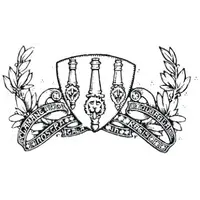
Unveiled in 1888, Royal Arsenal’s first crest featured three cannons viewed from above, pointing northwards. The design was heavily inspired by the coat of arms of the Metropolitan Borough of Woolwich and highlighted the club’s close association with the Royal Arsenal armaments factory. This distinctive badge established the cannon as the club’s principal symbol and linked Arsenal’s identity directly to its birthplace.
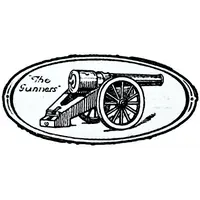
Following the club’s move from Woolwich to Highbury in North London in 1913, the original crest gradually disappeared from use. A major transformation came in 1922 when Arsenal introduced a new badge featuring a single cannon pointing eastwards, accompanied by the nickname “The Gunners.” The simplified design moved away from the complex heraldic appearance of the earlier crest while strengthening the connection between the club and its famous nickname.
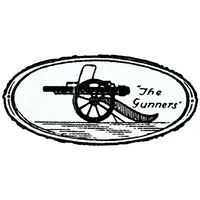
The crest was refined again in 1925 when the cannon was reversed to face west and given a more detailed appearance. This version laid the foundations for the club’s visual identity throughout much of the twentieth century and helped establish the cannon as one of the most distinctive emblems in English football.
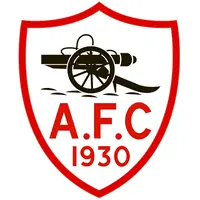
In 1930, Arsenal introduced a badge featuring a single horizontal cannon with considerably more detail than the earlier 1922 and 1925 designs. The crest was not a fully enclosed shield but rather a stylised emblem centred around the cannon itself.
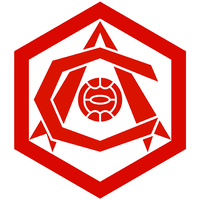
In a departure from tradition, in 1936, Arsenal adopted an elegant Art Deco-inspired shield featuring an intertwined "AFC" monogram. The cannon disappeared entirely from the design. The badge reflected contemporary design trends of the era and coincided with Arsenal's dominance of English football during the 1930s.
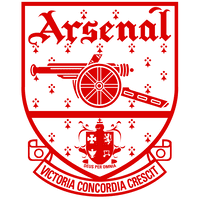
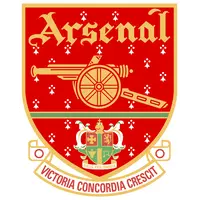
In 1949, Arsenal adopted a more elaborate and modernised crest that would become one of the most iconic badges in the club’s history. The design featured the cannon beneath the club’s name in blackletter script, alongside the coat of arms of the Metropolitan Borough of Islington and a scroll bearing the Latin motto “Victoria Concordia Crescit” (“Victory Through Harmony”). The badge reflected both the club’s North London home and the values of unity and teamwork that had become associated with Arsenal’s success.
For more than fifty years, the 1949 crest became synonymous with Arsenal Football Club. It was worn during many of the club’s greatest achievements, including domestic league titles, FA Cup triumphs and the successful eras under managers such as Herbert Chapman and Arsène Wenger.
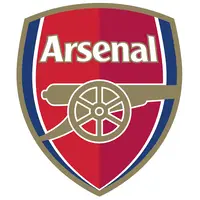
A major transformation came in 2002 when Arsenal unveiled a simplified and more contemporary crest. The redesign featured cleaner lines, a modern shield shape and a gold cannon once again facing east. The new badge was created partly to allow the club to secure full copyright ownership of its identity while supporting Arsenal’s growing global presence. Although modern in appearance, the redesign retained the cannon as the focal point of the crest and preserved the club’s historic colours.
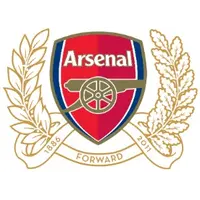
During the 2011–12 season, Arsenal celebrated its 125th anniversary with a special commemorative version of the crest. The design incorporated additional elements representing the club’s founders and its long history, providing a visual link between Arsenal’s Victorian origins and its modern success.


Arsenal FC Club History: 
Arsenal Football Club was founded on 1 May 1886 as Dial Square FC by workers at the Royal Arsenal armaments factory in Woolwich, South East London. Named after the military workshops where many of its founders were employed, the club was renamed Royal Arsenal later that same year before becoming Woolwich Arsenal in 1891. Originally formed by munitions workers seeking a football team of their own, Arsenal quickly established itself as one of the strongest clubs in Southern England.
Arsenal played a pioneering role in the development of football in the capital. In 1893, the club became the first team from the south of England to join the Football League, helping to break the northern dominance of the professional game. The club continued its rise and earned promotion to the First Division in 1904. Earlier, in 1897, Arsenal had already become the first professional football club in London, an important milestone in the growth of the sport within the city.
A major turning point came in 1913 when the club relocated from Woolwich to Highbury in North London. The move transformed Arsenal’s future, placing the club in close proximity to Tottenham Hotspur and laying the foundations for the fierce rivalry that would become known as the North London Derby. The following year, in 1914, the club adopted the name Arsenal Football Club, a title it has retained ever since.
The appointment of Herbert Chapman in 1925 is widely regarded as one of the most significant moments in Arsenal’s history. Often referred to as “The Great Innovator,” Chapman revolutionised football through tactical developments, professional training methods and ambitious recruitment. Under his leadership, Arsenal won their first major trophy, the FA Cup, in 1930 and secured their first league championship in 1930–31. Chapman also introduced innovations such as shirt numbers, white sleeves on Arsenal’s red shirts and improvements to Highbury Stadium that helped shape the modern game.
The 1930s became Arsenal’s first golden era. Building upon Chapman’s foundations, the club won five League Championships and two FA Cups during the decade, establishing itself as the dominant force in English football. By the outbreak of the Second World War, Arsenal had become one of the most successful and influential clubs in the country.
Throughout the post-war years, Arsenal remained a major presence in English football. A landmark achievement came during the 1970–71 season, when the club won its first-ever League and FA Cup Double. The accomplishment placed Arsenal among an elite group of clubs capable of conquering both major domestic competitions in the same season and remains one of the defining moments in the club’s history.
Another successful era emerged during the late 1980s under manager George Graham. Arsenal won two league championships, including the dramatic 1988–89 title triumph at Anfield, as well as domestic cup honours and the European Cup Winners’ Cup in 1994. The period reinforced Arsenal’s reputation for organisation, discipline and defensive excellence.
One of the most transformative periods in Arsenal’s history began with the appointment of Arsène Wenger in 1996. Wenger revolutionised English football through innovative coaching methods, sports science and an attractive attacking style of play. Under his leadership, Arsenal won three Premier League titles and seven FA Cups, including two additional League and FA Cup Doubles. His greatest achievement came during the 2003–04 season, when Arsenal completed the entire league campaign unbeaten, earning the team the nickname “The Invincibles.”
In 2006, Arsenal left their historic Highbury home and moved to the nearby Emirates Stadium, marking the beginning of a new chapter in the club’s history. The move provided the infrastructure required for Arsenal to compete as a modern global football institution while preserving the club’s strong North London identity.
Following Wenger’s departure in 2018, Arsenal entered a period of transition before re-emerging as one of England’s leading clubs under manager Mikel Arteta. Under Arteta, Arsenal returned to competing for major honours and re-established itself among the strongest teams in English and European football. The club’s resurgence culminated during the 2025–26 season, when Arsenal won the Premier League title for the first time since the Invincibles campaign of 2003–04.
Arsenal’s principal rivalry is with Tottenham Hotspur in the North London Derby, one of the most famous and fiercely contested rivalries in world football. Additional rivalries exist with Chelsea and Manchester United, reflecting Arsenal’s long-standing position among the elite clubs of English football.