Skip to Content

Historical Crests ACF Fiorentina

Name: ​ACF Fiorentina
Nickname(s): Viola
Founded: 1926
Stadium: ​Stadio Artemio Franchi (Florence)
Capacity: ​​43,147

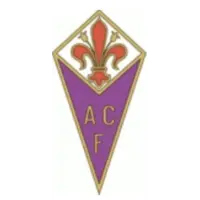
1926-1951
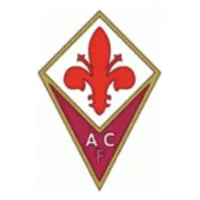
1951-1963
1963-1967
1967-1974
1974-1977
1977-1980
1980-1992
1992-2002
2002-2003
2003-2022
2022-Present

ACF Fiorentina Crest History
ACF Fiorentina possesses one of the most elegant and recognisable visual identities in European football.  Fiorentina's badge has consistently revolved around a single symbol: the Giglio Fiorentino (Florentine Lily), the historic emblem of the city of Florence. For nearly a century, every major Fiorentina crest has incorporated the lily in some form, creating one of the strongest connections between a football club and its city anywhere in the world.
During the late 1920s and 1930s, various versions of the lily appeared on club badges. These designs generally retained the traditional red flower while experimenting with different shield shapes and layouts. The focus remained firmly on the Giglio Fiorentino, ensuring continuity as the club developed its own footballing identity.
A major evolution occurred during the 1950s when Fiorentina adopted the diamond-shaped badge that would become one of the most iconic crests in Italian football. The design featured a red lily inside a white lozenge bordered by purple. The use of purple reflected the club's famous colours and strengthened the connection between the badge and the identity of La Viola. This version became closely associated with one of the most successful periods in Fiorentina's history, including the club's first Serie A title and its appearance in the European Cup Final.
Throughout the 1960s and 1970s, the club refined the diamond-shaped concept while preserving its essential elements. The red lily remained central, while purple borders and geometric shapes were adjusted to create a cleaner and more modern appearance. Unlike many clubs that frequently changed direction, Fiorentina focused on evolving a single visual concept rather than replacing it entirely.
One of the most controversial moments in the club's crest history arrived in 1980. Under the ownership of Flavio Pontello, Fiorentina introduced a radically different logo that combined half of the Florentine lily with half of the letter "F" for Fiorentina. The result was a highly stylised emblem intended to modernise the club's image. While innovative for its time, the design divided opinion among supporters. Many fans felt the badge moved too far away from the traditional lily and lacked the elegance and symbolism that had defined Fiorentina's identity for decades.
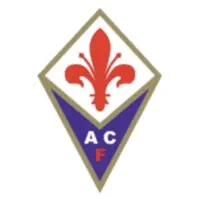
In 1992, the club returned to a more traditional approach with the introduction of the famous double-diamond crest. This badge featured an outer purple diamond containing the initials "ACF" and an inner white diamond displaying the red Florentine lily. Gold detailing completed the design, creating one of the most admired and distinctive badges in European football. For many supporters, this remains the definitive Fiorentina crest and is closely associated with the era of players such as Gabriel Batistuta and Rui Costa.
The club's bankruptcy in 2002 created another significant chapter in its visual history. Following the collapse of the original organisation and the formation of Florentia Viola, Fiorentina temporarily lost the rights to its traditional crest. During this period, simplified versions of Florence's civic symbols were used until the club regained ownership of its historic identity. Once the rights were recovered, Fiorentina restored a badge closely resembling the beloved 1992 design, re-establishing continuity with its past.
In 2022, Fiorentina unveiled its current crest. Inspired by the badges used during the club's most successful years in the 1950s, the redesign simplified the overall structure and placed greater emphasis on a larger red lily. The modern emblem features a cleaner diamond shape and a more minimalist aesthetic while remaining unmistakably Fiorentina. The redesign was intended to reconnect the club with its historical roots while creating a badge suited to contemporary branding and digital media.


ACF Fiorentina Club History
ACF Fiorentina is one of the most historic and beloved football clubs in Italy. Based in the city of Florence, the capital of Tuscany, the club was founded on 29 August 1926 through the merger of several local teams orchestrated by the Marquis Luigi Ridolfi. From its inception, Fiorentina was created with the ambition of providing Florence with a football club capable of competing against the established powers of northern Italy.
In its earliest years, the club wore red-and-white colours before adopting the famous purple kit that would become one of the most distinctive uniforms in world football. According to club tradition, the colour change occurred after a washing accident caused the original red shirts to fade into purple. Whether fact or legend, the colour became inseparable from the club's identity and gave rise to the nickname La Viola ("The Purple One"), by which Fiorentina is known throughout the footballing world.
Fiorentina quickly established itself within Italian football and achieved promotion to Serie A during the 1930s. The opening of the iconic Stadio Giovanni Berta, now known as the Stadio Artemio Franchi, provided the club with one of the most architecturally significant stadiums in Europe and became a symbol of Fiorentina's growing stature.
The club's first major success arrived in 1941 when Fiorentina won the Coppa Italia. However, the most significant breakthrough came during the 1950s. Under the leadership of players such as Julinho and Miguel Montuori, Fiorentina won its first Serie A title in 1955–56. The team dominated Italian football that season and established itself among the country's elite.
Fiorentina's success soon extended to Europe. In 1957, the club became the first Italian side to reach the final of the European Cup, where it lost to Real Madrid CF. Despite the defeat, the achievement marked Fiorentina as one of the pioneers of Italian football on the continental stage.
The 1960s brought further honours. Fiorentina won the Coppa Italia and became the first Italian club to lift a European trophy by winning the UEFA Cup Winners' Cup in 1961. The decade culminated in the club's second Serie A title during the 1968–69 season, a triumph that remains one of the greatest achievements in Fiorentina's history.
Throughout the following decades, Fiorentina consistently remained one of Italy's most respected clubs. The team attracted world-class players and developed a reputation for attacking football and passionate support. During the 1980s and 1990s, Fiorentina was led by some of the most iconic figures in Italian football, including Roberto Baggio and later Gabriel Batistuta. Batistuta in particular became a symbol of the club, scoring prolifically and earning legendary status among supporters.
Despite its rich history, Fiorentina faced a dramatic crisis in 2002. Financial problems led to bankruptcy and the collapse of the original club. A new organisation, Florentia Viola, was established to preserve football in Florence. Starting from the lower divisions, the club quickly worked its way back through the Italian football pyramid. After recovering the sporting title, history and trademarks of the original organisation, the club once again became ACF Fiorentina, restoring continuity with the institution founded in 1926.
The club returned to Serie A in 2004 and soon re-established itself among Italy's leading sides. During the following years, Fiorentina regularly qualified for European competition and reached the latter stages of tournaments such as the UEFA Champions League and the UEFA Europa League.
Fiorentina's most significant rivalry is with Juventus FC. The hostility between the two clubs intensified following the controversial transfer of Roberto Baggio from Florence to Turin in 1990 and remains one of the fiercest rivalries in Italian football. Matches against Juventus are among the most anticipated fixtures of every season. The club also shares notable rivalries with Bologna FC 1909, AC Siena and AS Livorno Calcio.

ACF Fiorentina

Your Dynamic Snippet will be displayed here... This message is displayed because you did not provide enough options to retrieve its content.