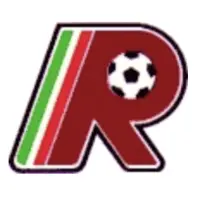
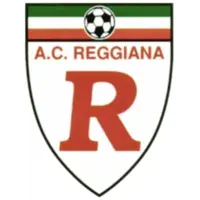
Reggiana's badge has often focused on simplicity, typography and symbols connected to the city known as the birthplace of the Italian tricolour. Throughout its history, the club's visual identity has evolved considerably while remaining closely tied to its famous granata (maroon) colours.
In the club's early decades, Reggiana used relatively simple emblems and monograms typical of Italian football during the first half of the twentieth century. The club's identity was defined primarily by its maroon colours, from which the nickname I Granata ("The Maroons") originated. Over time, these colours became the most recognisable aspect of the club's image and remain central to every version of the crest.
During the 1980s, Reggiana adopted one of its most memorable emblems. This badge prominently featured a stylised capital "R", representing Reggiana, and became strongly associated with one of the most successful periods in the club's history.
The club introduced a series of updated crests during the 1990s as Reggiana enjoyed periods in Serie A and sought a more modern image. While the shapes and proportions changed, the emphasis remained on the club's maroon identity and its connection to Reggio Emilia.
Following the club's bankruptcy in 2005, Reggiana temporarily lost the rights to its traditional name and crest. During the 2005–06 season, the newly formed Reggio Emilia FC used the municipal coat of arms of Reggio Emilia as its badge while efforts were made to recover the club's historical identity. This unusual period represented one of the few occasions in which the team did not compete under a traditional Reggiana emblem.
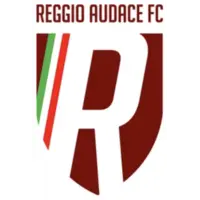
Another significant change occurred following the club's second collapse in 2018. The newly established Reggio Audace adopted a badge inspired by the famous Reggiana crests of the 1980s and 1990s. The design once again featured the prominent "R" and incorporated a vertical Italian tricolour, paying tribute to Reggio Emilia's status as the city where the modern Italian flag originated in 1797. The tricolour became the dominant visual element of the badge, reinforcing the club's civic identity.
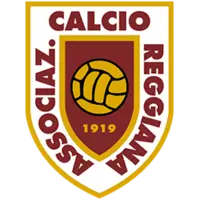
When the club returned to the name AC Reggiana 1919 in 2020, the traditional circular crest was restored after the club reacquired its historic trademarks. This restoration was welcomed by supporters as a symbolic reconnection with the club's heritage.
AC Reggiana 1919 Club History
AC Reggiana 1919 has represented the city of Reggio Emilia since its foundation in 1919.
The club was originally founded in 1919 as Associazione Calcio Reggiana and quickly established itself within the Italian football system. The club became closely associated with its distinctive maroon colours, which gave rise to the nickname Granata ("The Maroons"). Supporters also commonly refer to the club as La Regia or simply Regia.
Reggiana's greatest sporting achievements came during the early 1990s, when the club reached Serie A and competed among Italy's elite. Under managers such as Giuseppe Marchioro and later Carlo Ancelotti, Reggiana enjoyed some of the most successful seasons in its history, establishing itself on the national stage.
The club's rise to Serie A brought increased visibility and attracted several notable players. Among the most famous was Cláudio Taffarel, the World Cup-winning goalkeeper who represented Reggiana during the club's top-flight years. Although the club's stays in Serie A were relatively brief, competing at the highest level remains one of the defining chapters in Reggiana's history.
Financial difficulties eventually undermined the club's progress. In 2005, AC Reggiana was declared bankrupt and ceased operations. To preserve professional football in the city, a successor organisation was established under the name Reggio Emilia FC. Despite the collapse, the new club successfully recovered the naming rights, honours and historical records of the original Reggiana, ensuring continuity with the institution founded in 1919.
The recovery proved temporary. Following another period of financial instability, the club suffered a second bankruptcy in 2018. Once again, football in Reggio Emilia was saved through the creation of a new organisation, this time under the name Reggio Audace FC. Starting anew in the lower divisions, the club worked to rebuild its sporting and financial foundations while maintaining the traditions and identity associated with Reggiana.
As had occurred after the 2005 collapse, the reborn club eventually regained the rights to the historic name and trophies of AC Reggiana. In 2020, the organisation officially returned to the name AC Reggiana 1919, restoring the identity that supporters had cherished for generations. The recovery represented not only a legal and administrative success but also a symbolic reunion between the club and its history.
Reggiana plays its home matches at the Mapei Stadium – Città del Tricolore, a modern venue that has become the centre of the club's contemporary identity. The stadium reflects the city's footballing ambitions while maintaining a connection to the traditions built over more than a century.
The club's most important rivalry is with Parma Calcio 1913. Matches between the two sides are known as the Derby dell'Enza, named after the Enza River that separates the provinces of Reggio Emilia and Parma. The fixture is also commonly referred to as the Derby del Parmigiano Reggiano, reflecting the shared cultural heritage of the region.