Historical Crests Aberdeen FC
Name: Aberdeen FC
Nickname(s): The Dons
Founded: 1903
Stadium: Pittodrie Stadium
Capacity: 20,866
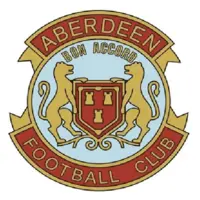
1921-1956
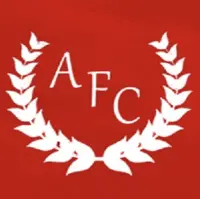
1956-1965
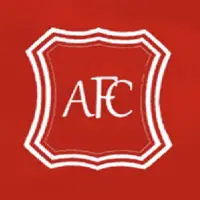
1965-1967
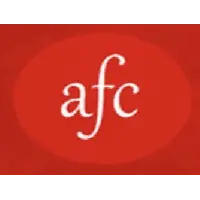
1967-1972
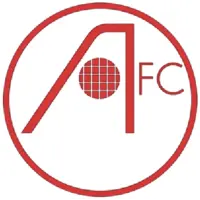
1972-1986
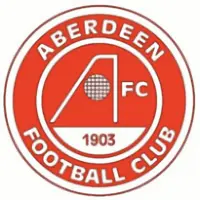
1986-1997
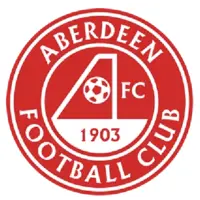
1997-2005
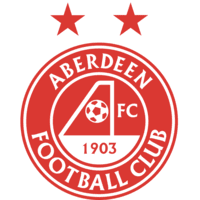
2005-Present
Aberdeen FC Crest History
Aberdeen’s crest has been centred on a simple yet highly recognisable graphic design that reflects the club’s footballing identity and achievements.
Before 1972, Aberdeen FC had no official club crest. Instead, various stylised versions of the letters “AFC” occasionally appeared on shirts and club materials, often rendered in cursive or decorative lettering. While these monograms provided a basic visual identity, the club lacked a dedicated badge that could serve as a consistent symbol.
That changed in November 1972 when local Aberdonian designer Donald Addison created a new club logo. The design was innovative and highly distinctive. It featured the letter “A” shaped to resemble a football goal, while a crosshatched football represented a ball being scored into the net. The letters “FC” were positioned alongside the ball, completing a simple yet effective visual representation of football itself.
The new badge quickly became associated with Aberdeen and began appearing on playing shirts during the late 1970s. Its modern and minimalist appearance helped distinguish the club from many of its rivals and established one of the most recognisable logos in Scottish football.
During the mid-1980s, following the most successful period in the club’s history under Sir Alex Ferguson, the badge underwent a refinement. The original logo was placed within a circular border featuring the words “Aberdeen Football Club” and the club’s foundation year, 1903. The update preserved Donald Addison’s iconic design while giving the crest a more complete and traditional appearance.
In 1997, Aberdeen introduced a refined version of the crest that remains the basis of the club’s identity today. The redesign improved consistency and presentation while retaining the famous goal-shaped “A,” football motif and circular border. The update ensured a unified and recognisable brand while remaining faithful to the original concept created in 1972.
A further enhancement arrived during the 2005–06 season when two stars were added above the crest. These stars commemorate Aberdeen’s two major European triumphs of 1983: the European Cup Winners’ Cup and the UEFA Super Cup. Their inclusion serves as a permanent reminder of the club’s greatest achievements and its unique place in Scottish football history.
Aberdeen FC Club History
Aberdeen Football Club was founded in 1903 through the merger of three local clubs: Aberdeen, Orion and Victoria United. From its formation, the club quickly established itself in Scottish football and holds a unique distinction among Scotland’s major clubs: Aberdeen has never been relegated from the top tier of Scottish football. The club has played its home matches at Pittodrie Stadium since its foundation, making it one of the longest-standing stadium associations in the game.
Although major success was limited during the club’s early decades, Aberdeen gradually developed into one of Scotland’s strongest teams. The club’s fortunes improved significantly following the Second World War under manager Dave Halliday. During this period, Aberdeen won all of Scotland’s major domestic honours, including the Scottish League Championship, the Scottish Cup and the Scottish League Cup, firmly establishing itself as a major force outside the traditional Glasgow powers.
Aberdeen won its first Scottish League title in 1954–55 and followed this success by lifting the Scottish League Cup in 1955–56. These achievements marked the beginning of a period in which the club consistently challenged at the top end of Scottish football and built a reputation as one of the country's leading sides.
The greatest era in Aberdeen’s history arrived during the 1980s under the management of Sir Alex Ferguson. Ferguson transformed the club from a domestic challenger into one of Europe’s most respected teams. During his remarkable tenure, Aberdeen won three Scottish League titles, four Scottish Cups, a Scottish League Cup and, most famously, two European trophies. This golden era cemented the club’s place among the elite of Scottish football.
The pinnacle of Aberdeen’s success came in 1983 when the club defeated Real Madrid 2–1 after extra time in the European Cup Winners’ Cup Final in Gothenburg. Goals from Eric Black and John Hewitt secured one of the greatest victories in Scottish football history. Later the same year, Aberdeen defeated Hamburger SV to win the UEFA Super Cup, becoming the last Scottish club to win a major European trophy and the only Scottish club outside Glasgow to achieve such success.
The Ferguson side featured a remarkable group of players including Willie Miller, Alex McLeish, Jim Leighton, Gordon Strachan and Mark McGhee. Together they helped create a period of sustained success that remains unmatched in the club’s history and is regarded as one of the finest eras achieved by any Scottish club.
Following Ferguson’s departure to Manchester United in 1986, Aberdeen remained competitive and continued to win domestic honours. The club added further Scottish Cups and League Cups during the late 1980s and 1990s, maintaining its status as one of Scotland’s strongest clubs. More recently, Aberdeen ended a lengthy wait for major silverware by winning the Scottish League Cup in 2014 and added another Scottish Cup triumph in 2025.
Aberdeen supporters are known as the “Red Army,” reflecting the club’s famous all-red strip introduced during the 1960s. The club enjoys one of the largest and most loyal fanbases in Scotland and continues to attract strong support throughout the country.
The club’s fiercest rivalry is with Dundee United. During the 1980s, when both clubs regularly challenged for league titles and domestic trophies, their meetings became known as the “New Firm” derby. Aberdeen also shares strong rivalries with Rangers and Celtic, reflecting its long-standing role as Scotland’s most successful club outside Glasgow.
Aberdeen FC
Your Dynamic Snippet will be displayed here... This message is displayed because you did not provide enough options to retrieve its content.