Historical Crests Valencia CF
Name: Valencia CF
Nickname(s): Los Ches (The Bats)
Founded: 1919
Stadium: Camp de Mestalla (Valencia)
Capacity: 49,430
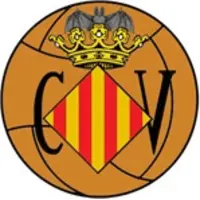
1919-1921
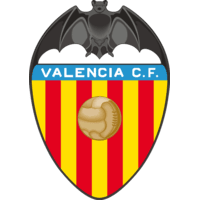
1921-1941
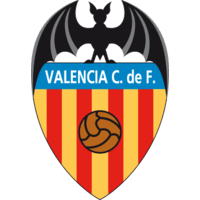
1941-1992
1992-2001
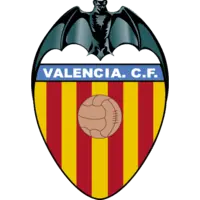
2001-2009
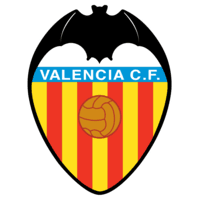
2009-Present
Valencia CF Crest History
Valencia CF's crest is deeply connected to the history of the city of Valencia and incorporates symbols that long predate the foundation of the football club itself. Valencia's emblem is rooted in medieval heraldry and civic tradition, making it one of the most historically significant crests in European football.
From its earliest years, Valencia adopted a shield inspired by the coat of arms of the city of Valencia. The most recognisable feature of the crest is the bat that sits above the shield. This symbol has been associated with Valencia for centuries and appears on the city's own coat of arms. The bat's presence links the football club directly to the identity and history of Valencia, establishing a visual connection that remains central to the club's image today.
The origins of the bat can be traced to the medieval history of the Kingdom of Valencia. In the early thirteenth century, Valencia and the Balearic Islands came under the rule of James I of Aragon following the Christian conquest of the region. After the reconquest, Valencia became an independent kingdom under the Crown of Aragon. The city's coat of arms evolved from royal heraldic symbols associated with James I and his successors, including the crowned "L" letters granted by Peter IV of Aragon. These letters symbolised the city's loyalty to the crown and became an enduring part of Valencian heraldry.
Several explanations have been proposed for the bat's appearance on Valencia's coat of arms. One theory suggests that bats were abundant throughout the region and naturally became associated with the city. A more famous legend recounts that on 9 October 1238, shortly before James I recaptured Valencia from Moorish rule, a bat landed on the king's standard. The event was interpreted as a favourable omen and, following the successful conquest, the bat was incorporated into Valencian heraldry as a symbol of good fortune and victory. Whether historical fact or legend, the story has become one of the most enduring elements of Valencia's identity.
Valencia CF's earliest crests closely followed the city's heraldic traditions. The badge featured a shield incorporating the club's colours and identity beneath the famous bat. Throughout the first half of the twentieth century, the club refined the design while retaining the essential elements that supporters had come to recognise. The bat remained prominently positioned above the shield, reinforcing the club's connection to the city.
During the late twentieth century and early twenty-first century, Valencia introduced further refinements to improve the badge's clarity across television broadcasts, merchandise and digital media. The outlines became cleaner, colours more standardised and graphic details more balanced. Despite these updates, the club resisted the trend toward minimalist rebranding, preserving the historic appearance of the crest.
One of the most unusual episodes in the crest's history occurred in 2013 when Valencia became involved in a legal dispute with DC Comics regarding the club's bat emblem. Valencia sought to register a stylised bat design for use on casual clothing, but DC Comics argued that the image was too similar to the famous Batman logo. The dispute expanded to include objections to Valencia's centenary logo, with DC claiming potential confusion between the club's bat symbol and Batman's emblem. Ultimately, the controversy attracted international attention but did not alter Valencia's traditional crest, which had existed long before the creation of the Batman character.
Valencia CF Club History
Based in the city of Valencia on Spain's Mediterranean coast, the club was founded on 18 March 1919.
The club was founded by a group of football enthusiasts led by Octavio Augusto Milego Díaz, with the first president chosen by coin toss. In its early years, Valencia quickly established itself as one of the strongest clubs in the Valencian region and gained a reputation for ambitious growth. The club initially played at various grounds before moving to its permanent home, the legendary Mestalla Stadium, in 1923. The stadium has served as Valencia's home ever since and remains one of the most iconic venues in Spanish football. With a capacity of approximately 49,430 spectators, Mestalla is renowned for its steep stands, intimidating atmosphere and deep connection to the club's identity.
Valencia's rise to national prominence accelerated during the 1940s, a decade often regarded as the club's first golden era. Led by legendary players such as Mundo, Epi and Amadeo Ibáñez, Valencia won multiple La Liga titles and established itself among the strongest teams in Spain. The club's attacking style and consistent success earned it a place alongside the country's traditional footballing giants.
Throughout the following decades, Valencia remained a major force in Spanish football. The club added further domestic honours and achieved significant success on the international stage. One of its most notable achievements came in 1980 when Valencia won the European Cup Winners' Cup, followed by victory in the UEFA Super Cup later that year. These triumphs confirmed Valencia's status as one of Europe's leading clubs.
Although the club experienced periods of financial and sporting instability during the 1980s, including a brief relegation from La Liga in 1986, Valencia quickly returned to the top flight and rebuilt its reputation. By the 1990s, the club had once again become a regular contender for domestic and European honours.
The most successful modern era arrived during the late 1990s and early 2000s. Under managers such as Héctor Cúper and Rafael Benítez, Valencia emerged as one of Europe's strongest teams. The club reached consecutive UEFA Champions League Final appearances in 2000 and 2001, narrowly missing out on continental glory. These achievements were followed by domestic success, with Valencia winning La Liga titles in 2001–02 and 2003–04. The 2003–04 season proved particularly memorable, as Valencia completed a remarkable league and UEFA Cup double, securing both Spanish and European honours in the same campaign.
During this period, players such as Gaizka Mendieta, David Albelda, David Villa and Santiago Cañizares became club icons and helped cement Valencia's reputation as one of Europe's premier football institutions.
Valencia has long been recognised for its passionate support. The club is widely regarded as the fourth most supported football club in Spain, behind only the country's traditional giants. Approximately 750 official supporter clubs, known as peñas, exist throughout Spain and beyond, creating a vast and dedicated fan network. At its peak, Valencia was considered one of the world's largest clubs by membership, boasting around 50,000 season ticket holders and regularly filling Mestalla for major fixtures. While attendance and membership figures declined during the mid-2010s amid sporting and ownership-related controversies, the club continues to enjoy one of the most loyal and passionate fanbases in Spanish football.
A defining rivalry in Valencia's history is with Levante UD. Matches between the two clubs are known as the Derbi Valenciano and represent the most important football fixture in the city. Valencia also shares notable rivalries with Villarreal CF and other clubs from the Valencian Community, reflecting the region's rich footballing culture.
Valencia CF Pins
Your Dynamic Snippet will be displayed here... This message is displayed because you did not provide enough options to retrieve its content.