Historical Crests Sevilla FC
Name: Sevilla FC
Nickname(s): Sevillistas
Founded: 1905
Stadium: Ramón Sánchez Pizjuán (Sevilla)
Capacity: 42,714

1908-1909 (1)

1908-1909 (2)
1909-1915
1915-1918
1918-1921
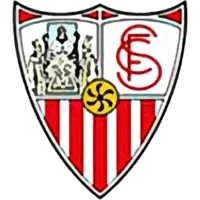
1922-1926
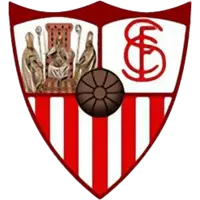
1926-1932
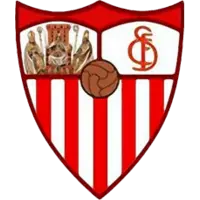
1932-1935
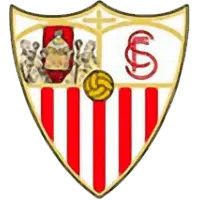
1935-1945
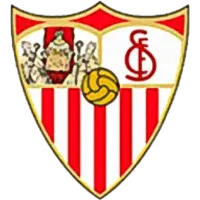
1945-1966
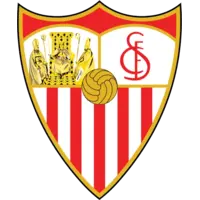
1966-1979
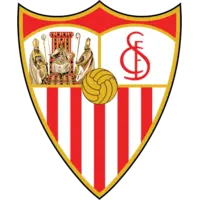
1979-1995
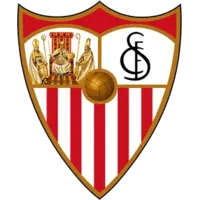
1995-Present

2013
Sevilla FC Crest History
The club's original crest was designed by Juan Lafita during the early years of Sevilla FC. It featured a simple double-circled emblem that reflected the design conventions of many football clubs at the beginning of the twentieth century. The outer ring displayed the club's name and founding date, while the inner circle contained the interlaced letters "SFC" on a white background. This elegant monogram quickly became associated with the club and remains one of the most enduring elements of Sevilla's identity, continuing to appear in the modern crest more than a century later.
A major transformation occurred in 1922 when Pablo Rodríguez Blanco designed the crest that would establish the foundation of Sevilla FC's modern visual identity. The new badge adopted a shield divided into three sections, creating a distinctive silhouette often described as resembling a heart. The redesign moved beyond simple initials and incorporated important symbols from the history of the city itself.
The left section of the shield featured three figures drawn from the coat of arms of Seville: Isidore of Seville, Ferdinand III of Castile and Leander of Seville. These Christian saints and historical figures had long been associated with the city's identity and reinforced the connection between the football club and Seville's religious and cultural heritage.
The right section retained the famous interlaced "SFC" initials that had appeared on the original badge from 1905 onwards, ensuring continuity with the club's earliest emblem. At the point where the three sections converged, Rodríguez Blanco placed a traditional football, symbolising the sport that united the various elements of the design. The ball remains one of the most recognisable features of the crest today.
The central portion of the badge introduced the red-and-white vertical stripes that would become synonymous with Sevilla FC. Several theories exist regarding the origin of these colours. One suggests that the club had always intended red and white to form the basis of its official playing kit. Another links the colours to the historic banner carried by King Ferdinand III during the Reconquest of Seville in 1248, creating a symbolic connection between the club and one of the most significant events in the city's history.
Throughout the twentieth century, Sevilla FC made only modest alterations to the crest. Unlike many clubs that repeatedly redesigned their badges to follow changing trends, Sevilla chose to preserve the structure established in 1922. Updates generally focused on refining artistic details, improving the depiction of the saints, adjusting typography and modernising proportions. These changes enhanced the badge's visual clarity while maintaining its historical character.
The modern Sevilla FC crest is therefore remarkably faithful to the version introduced over a century ago. The saints, the interlaced "SFC" initials, the football and the red-and-white stripes all remain central features of the badge. Few major European clubs have preserved so much of their original symbolism while successfully adapting their crest to contemporary requirements.
Sevilla FC Club History
Sevilla Football Club, based in the city of Seville in Andalusia, holds the distinction of being Spain's oldest sporting club dedicated exclusively to football. The club was founded on 25 January 1890 by a group of British and Spanish residents, with the Scottish-born businessman Edward Farquharson Johnston serving as its inaugural president. The club's formation came at a time when football was still in its infancy in Spain, making Sevilla one of the true pioneers of the sport in the country. Although the club traces its origins to 1890, its articles of association were officially registered on 14 October 1905 during the presidency of José Luis Gallegos Arnosa, a native of Jerez who is widely regarded as one of the key figures in the club's early development.
In its formative years, Sevilla FC played a crucial role in spreading football throughout Andalusia. The club participated in some of the earliest organised matches in Spain and quickly established itself as the leading football institution in the region. As football's popularity expanded during the early twentieth century, Sevilla became a dominant force in Andalusian competitions and helped lay the foundations for the professional game in southern Spain.
The club joined the national league structure following the creation of the Spanish football pyramid and gradually developed into one of the country's most competitive teams. Sevilla enjoyed significant success during the 1930s and 1940s, winning several regional championships and establishing itself among Spain's elite clubs. The pinnacle of this period arrived in the 1945–46 season when Sevilla captured its only Spanish league title, finishing as champions of La Liga and securing the greatest domestic achievement in the club's history.
Throughout the following decades, Sevilla remained a regular presence in the top division and became known for its passionate support and strong footballing culture. The club's home ground, the Ramón Sánchez-Pizjuán Stadium, opened in 1958 and became one of Spain's most iconic football venues. The stadium has hosted major international fixtures, including matches at the 1982 FIFA World Cup, and remains a symbol of Sevilla's standing within Spanish football.
One of the most fascinating chapters in the club's history occurred in 1992 when legendary Argentine footballer Diego Maradona joined Sevilla. Following his departure from Italian football, Maradona spent a single season with the club, making Sevilla the final destination of his European club career. Although his time in Andalusia was brief, his arrival brought global attention to Sevilla and remains one of the most memorable moments in the club's history.
The late twentieth century brought periods of instability, including relegations and financial challenges. However, Sevilla's fortunes changed dramatically in the early 2000s. Under the presidency of José María del Nido and the sporting direction of Monchi, the club developed one of the most admired recruitment and player-development models in world football. By identifying talented players at relatively low cost and selling them for significant profits, Sevilla created a sustainable framework that allowed the club to compete with wealthier rivals.
This strategy ushered in the most successful era in Sevilla's history. Under coaches such as Juande Ramos and later Unai Emery, the club became a dominant force in European competition. Sevilla won the UEFA Cup in 2006 and 2007 before establishing an unprecedented record in the competition's successor, the UEFA Europa League. Multiple triumphs throughout the 2000s and 2010s transformed Sevilla into the most successful club in the history of the tournament and earned the club a reputation as European football's specialists in knockout competition.
A defining feature of Sevilla's identity is its fierce rivalry with Real Betis. Matches between the two clubs, known as the Derbi Sevillano or Gran Derbi, are among the most intense rivalries in Spanish football. The rivalry divides the city of Seville and has been a central part of the club's culture for more than a century.
Sevilla is also home to Spain's oldest organised ultra group, the Biris Norte. Founded in the 1970s, the group has become one of the most recognised supporter organisations in Spanish football and is renowned for creating the intense atmosphere associated with the Ramón Sánchez-Pizjuán.
Sevilla FC
Your Dynamic Snippet will be displayed here... This message is displayed because you did not provide enough options to retrieve its content.