Club History: Vitesse Arnhem was founded 1892. This historic has its most successful period in the 1990s. Their best result in the Eredivisie was third place in 1997-1998. They won the KNVB Cup in 2017. In 2010, they were the first club in the country to be bought by a foreign investor. Their outlays earned them the nickname of “FC Hollywood on the Rhine” at the time they were returning to the Europa League. NEC from Nijmegen are Vitesse’s arch rivals. The two clubs share a long history together and matches between the two clubs are called the Gelderse Derby (Derby of Gelderland). The rivalry between these two clubs goes beyond the football rivalry, it transcends into the city rivalry between the two largest cities of Gelderland: Nijmegen and Arnhem. This city rivalry began when these two cities first received their city rights. The two cities are just 20 kilometres apart, leading to an intense feeling of a cross-town rivalry, heightened by a feeling that local pride is at stake. The meeting between the two teams is still considered to be one of the biggest matches of the season.
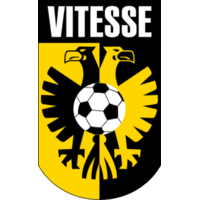
Crest: The first logo of Vitesse was a shield-shaped crest. In the middle there was a diagonal dividing line between the left yellow face and the right black box. In the left box, “AVC Vitesse” was diagonally written and in the right-hand side, “1892 “, the club’s founding year. The old logo was replaced in 1984, the year in which the roads of the BVO branch and the amateur branch separated. The amateur branch retained the logo with limited modification, SBV Vitesse got a new logo. The new logo of the BVO from 1984 is once again a shield-shaped figure, but it has straight lines at both the top and sides of the logo. At the top is with thick white uppercase Vitesse. Under the name is a double-headed eagle, with left and right half mirrored. Also the colors are mirrored, which is left yellow is black right and vice versa. This double-headed eagle can also be found in the coat of arms of Arnhem. In the middle of the logo is a football positioned. In the autumn of 2011, a new version of the logo was put into use; A total of 13 changes have been made. For example, the symmetry of the eagle was improved, the black outer edge replaced by a white and in the writing has been made thinner. The football has been altered in terms of appearance as a shadow effect is added and (if the context allows it) the year of creation as text EST. 1892 under the logo can be found.