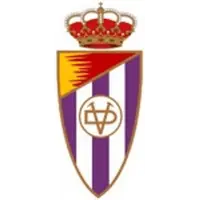
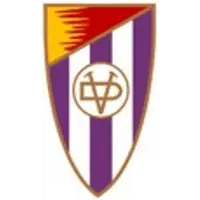
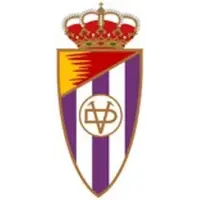
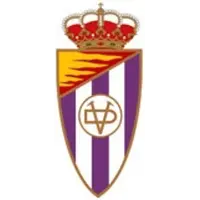
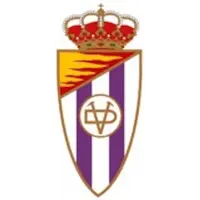
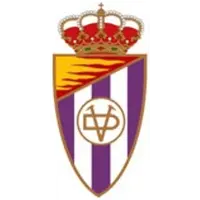
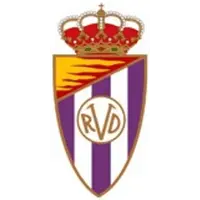
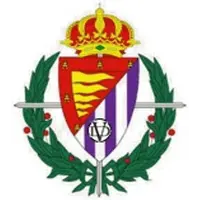
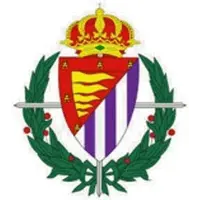
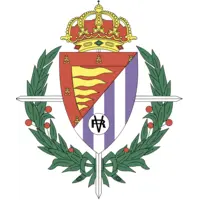
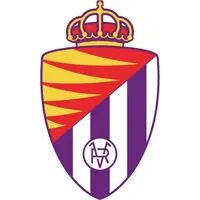
Historical Crests Real Valladolid
Name: Real Valladolid
Nickname(s): Puce / Pucelanos (Pucelle)
Founded: 1928
Stadium: Estadio José Zorrilla (Valladolid)
Capacity: 27,846
Real Valladolid Crest History
Real Valladolid CF inherited a rich visual heritage from its predecessor clubs. Throughout its history, the club’s crest has evolved while consistently maintaining strong links to the city of Valladolid and the historical symbols of Castile.
The earliest badge adopted following the club’s formation drew heavily from the heraldic traditions of Valladolid. Unlike many football clubs that developed entirely new identities, Real Valladolid chose to incorporate elements closely associated with the city and the institutions that preceded it. This decision established a visual continuity that has remained a defining characteristic of the club’s crest ever since.
One of the most distinctive features of the badge is the closed royal crown, inherited from Real Unión Deportiva, one of the clubs that merged to form Real Valladolid. The crown reflects the royal distinction associated with the club’s origins and has remained a central element of the crest throughout its history.
Another defining feature is the inclusion of violet-and-white stripes, representing the club’s traditional colours. The violet colour has become synonymous with Real Valladolid and is one of the most recognizable aspects of the club’s identity. These stripes have appeared in various forms throughout the crest’s evolution and continue to serve as a visual representation of the team on and off the pitch.
Throughout much of the twentieth century, the club made only minor modifications to its badge. Adjustments were typically limited to refinements in shape, colour balance and graphic presentation rather than major structural redesigns. This continuity helped preserve the club’s identity even as football branding evolved across Spain and Europe.
The most notable recent redesign came in 2022, when Real Valladolid unveiled a comprehensive brand refresh. The new crest maintained all of the traditional symbols that had defined the club for generations but reinterpreted them in a more contemporary and visually coherent style. The redesign emphasized the connection between the club and the city of Valladolid while improving adaptability across digital and commercial platforms.
In its latest iteration, the crest pays tribute to Valladolid through a series of carefully considered details. The club introduced a new corporate typeface known as Pucela, derived from the city’s famous nickname, and refined the overall colour palette. The redesigned flame motif incorporated yellow and red tones linked to the city’s history, while the traditional castles, crown and violet-and-white stripes were preserved as key components of the emblem.
Real Valladolid Club History
Real Valladolid Club de Fútbol was founded on 20 June 1928 in the city of Valladolid, located in the autonomous community of Castile and León. The club was created through the merger of Real Unión Deportiva and Club Deportivo Español.
A major milestone arrived in 1948, when Real Valladolid achieved promotion to La Liga for the first time. The club’s debut in the 1948–49 season made it the first team from Castile and León to compete in Spain’s top division. This achievement marked a historic moment not only for the club but also for the entire region, establishing Real Valladolid as its leading football representative.
Throughout the 1950s and 1960s, Valladolid became a regular participant in Spanish professional football, alternating between the top two divisions while continuing to strengthen its position within the national game.
One of the greatest achievements in the club’s history came in 1950, when Real Valladolid reached the Copa del Generalísimo Final (now the Copa del Rey). Although the club was defeated by Athletic Club, reaching the final remains one of the most significant accomplishments in its history.
A defining chapter in the club’s modern history began with the opening of the Estadio José Zorrilla in 1982. Built to host matches during the 1982 FIFA World Cup, the stadium became the club’s new home and remains one of the most recognizable sporting venues in Castile and León.
The 1980s represented one of the most successful periods in Real Valladolid’s history. In 1984, the club won the Copa de la Liga, the only major national trophy in its history. The achievement remains a proud moment for supporters and cemented Valladolid’s place among Spain’s respected football institutions.
During the twenty-first century, Real Valladolid developed a reputation as one of Spain’s classic “yo-yo clubs.” The team frequently moved between La Liga and the Segunda División, securing several promotions to the top flight before suffering relegations and rebuilding once again. Despite these fluctuations, the club consistently demonstrated an ability to return to Spain’s highest level and remain competitive.
A notable chapter in the club’s recent history began in 2018, when former Brazilian international Ronaldo Nazário acquired a majority ownership stake in the club. His arrival brought international attention to Valladolid and introduced new ambitions for the institution both on and off the pitch.
The team is affectionately known as Pucela, a nickname closely associated with the city of Valladolid, and plays in its traditional violet-and-white colours. These colours have become synonymous with the club and are reflected throughout its identity, culture and supporter traditions.
Real Valladolid’s principal rivalries include matches against nearby regional clubs, although the club’s status as the dominant football institution in Castile and León has often left it without a single defining derby comparable to those found in other parts of Spain.
Real Valladolid Pins
Your Dynamic Snippet will be displayed here... This message is displayed because you did not provide enough options to retrieve its content.