Skip to Content

Historical Crests FC Den Bosch

Name: FC Den Bosch
Nickname(s): The Blue White Dragons
Founded: 1965
Stadium: De Vliert (Den Bosch)
Capacity: 8,500

1965-1967
1967-1984
1984-1988
1988-1992
1992-1994
1994-1998
1998-2015
2015-Present

FC Den Bosch Crest History
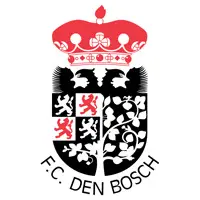
The club was founded in 1965 as FC Den Bosch/BVV, the successor to the historic BVV. The earliest crest featured a simple monogram design built around the club's initials. The logo also incorporated elements of the city's coat of arms.
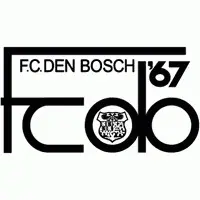
A significant redesign arrived in 1967 when Wilhelmina joined the professional organisation and the club became FC Den Bosch '67. A new crest was introduced featuring a stylised lowercase "d" in which elements of the city's coat of arms could still be recognised. The addition of "'67" reflected the new chapter in the club's history and the expanded football structure in the city.
During the 1980s, the crest underwent several modifications. Sponsorship arrangements influenced the logo's appearance, leading to changes in colour and graphic elements. While the overall identity remained recognisable, some traditional references to the city temporarily disappeared from the badge.
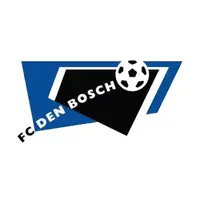
A major transformation occurred in 1988 when the club adopted the name BVV Den Bosch following a collaboration with the amateur club BVV. A new crest was introduced that incorporated visual elements inspired by BVV's historic logo. Several variations followed during this period as sponsors changed, resulting in multiple versions of the badge being used between 1988 and 1992.
In 1992, the club returned to its traditional name, FC Den Bosch. The collaboration with BVV ended and a new crest was unveiled. The redesign restored references to the city's coat of arms and re-established a stronger connection with the club's historical identity.
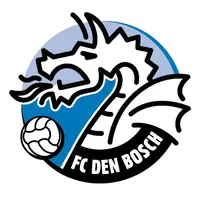
The most important redesign in the club's modern history arrived in 1998. The new badge introduced the dragon as the dominant symbol of the club. Inspired by the famous Moerasdraak ("Swamp Dragon"), a symbol deeply associated with the city of 's-Hertogenbosch, the crest combined the dragon with the club's blue-and-white colours and the FC Den Bosch name. This badge established the visual identity that supporters still associate most strongly with the club today.
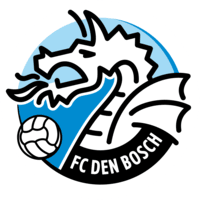
The current badge remains based on the 1998 dragon crest. Featuring the blue-and-white club colours, the FC Den Bosch name and the iconic dragon, it continues to symbolise both the football club and the rich history of 's-Hertogenbosch.

FC Den Bosch Club History
Founded in 1965, FC Den Bosch was created as the professional successor to the historic club BVV (Bossche Voetbal Vereniging), one of the oldest and most successful football clubs in the Netherlands. The new organisation was established to represent the city of 's-Hertogenbosch in professional football and quickly became the leading club of North Brabant's capital.
The roots of FC Den Bosch stretch back much further than 1965 through BVV, which won the Dutch national championship in 1948. Although FC Den Bosch itself was a new entity, it inherited much of the footballing tradition and supporter base associated with BVV.
In 1967, the club expanded further when another local side, Wilhelmina, joined the professional structure. The team briefly competed as FC Den Bosch '67, reflecting the growing ambition to create a strong football club capable of competing at the highest level of Dutch football.
One of the most successful periods in the club's history arrived during the 1980s. FC Den Bosch achieved several promotions to the Eredivisie and became a familiar presence in Dutch top-flight football. 
The club reached the KNVB Cup Final in 1991, one of the greatest achievements in its history. Although defeated by Feyenoord, the run to the final remains a landmark moment and highlighted FC Den Bosch's ability to compete with the strongest clubs in the country.
A notable achievement came in 1998–99, when FC Den Bosch won the Eerste Divisie title and secured promotion back to the Eredivisie. The championship demonstrated the club's ability to rebuild and challenge for honours despite operating with fewer resources than many rivals.
The early 2000s saw further promotions and relegations. Although sustained top-flight stability proved difficult to achieve, Den Bosch remained one of the most respected clubs in the second tier and continued to attract strong attendances.
One of the defining characteristics of FC Den Bosch is its strong regional identity. The club is closely associated with the city of 's-Hertogenbosch, known locally as Den Bosch, and its supporters are among the most passionate in Dutch football. The club's nickname, De Blauw-Witte Draken ("The Blue-White Dragons"), reflects the famous dragon symbolism of the city.
FC Den Bosch plays its home matches at Stadion De Vliert, a venue that has served as the club's home since its foundation. The stadium has witnessed numerous promotions, cup runs and memorable matches and remains one of the most recognisable football grounds in the Eerste Divisie.
The club's principal rivalries are with fellow North Brabant clubs such as NAC Breda, FC Eindhoven, Helmond Sport, TOP Oss and Willem II. These matches often carry significant regional importance and are among the most anticipated fixtures of the season.

FC Den Bosch

Your Dynamic Snippet will be displayed here... This message is displayed because you did not provide enough options to retrieve its content.