Nickname(s):Indios (The Indians), Colchoneros (Mattress Makers)
Founded:1903
Stadium:Metropolitano (Madrid)
Capacity:70,460
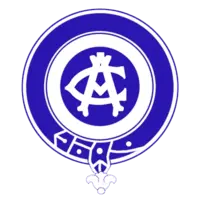
1903-1911
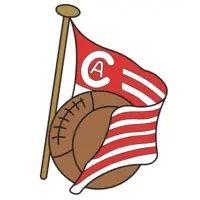
1911-1917
1917-1932
1932-1939
1939-1941
1942-1947
1947-1950
1950-1970
1970-2016
2016-2017
2017-2024
2024-Present
Atlético Madrid Crest History
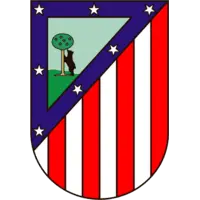
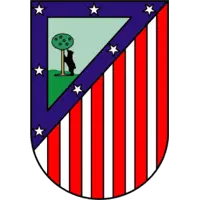
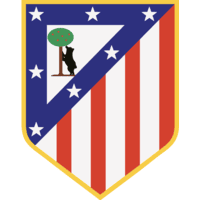
Atlético Madrid’s crest is most recognisable for its incorporation of the bear and strawberry tree (El Oso y el Madroño), taken from Madrid’s coat of arms, alongside the club’s iconic red-and-white stripes.
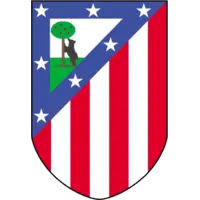
The origins of Atlético Madrid’s modern identity can be traced to 1917, when the club introduced a new badge featuring elements of the Coat of Arms of Madrid. The design included the bear reaching toward the strawberry tree, seven stars representing the region of Madrid, and the red-and-white stripes that had already become synonymous with the club.
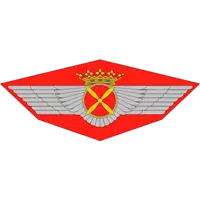
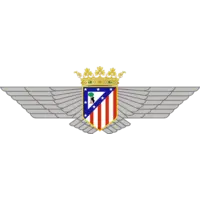
Throughout the first half of the twentieth century, the crest underwent several modifications as the club evolved and experienced periods under different names, including Atlético Aviación following the Spanish Civil War. Despite these changes, the connection to Madrid’s civic symbols remained a constant feature of the club’s identity.
A significant milestone came in 1947 when the club adopted the name Club Atlético de Madrid and incorporated the crest onto the team’s jersey. The shield-shaped badge featuring the bear, tree, stars and red-and-white stripes became one of the most recognisable emblems in Spanish football and remained largely unchanged for decades.
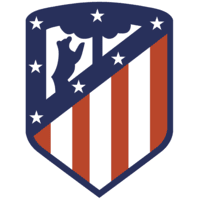
A major transformation came in 2016 when Atlético Madrid unveiled a redesigned crest, which was introduced for the 2017–18 season. The new badge featured a simplified shield shape, a reoriented bear, cleaner lines and a more modern appearance. While intended to support the club’s contemporary branding, the redesign generated significant debate among supporters, many of whom preferred the traditional emblem.
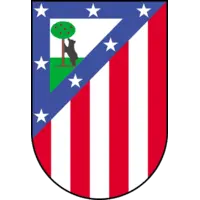
The club’s badge, initially introduced in 1917 featuring the Coat of Arms of Madrid and later incorporated into the club’s jersey from 1947, underwent a remodeling in 2016. However, a vote on June 30, 2023, revealed that 88.68% of club members desired to reinstate the historical badge, which was reintroduced on July 1, 2024.
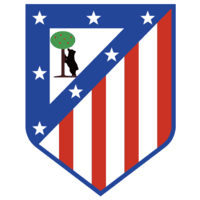
As a result, the traditional crest returned as the club’s official emblem for the 2024–25 season. The restored design re-established many of the features that supporters had associated with Atlético Madrid for generations, reflecting the club’s commitment to its heritage and identity.
Atlético Madrid Club History
Established on April 26, 1903, as Athletic Club Sucursal de Madrid, Atlético Madrid was founded by Basque students living in Madrid as a branch of the Bilbao-based club that would later become Athletic Club. In its earliest years, the club adopted the name “Athletic” and wore blue-and-white colours, mirroring those of its parent club.
A defining moment in the club’s identity came when red-and-white striped shirts were acquired for both sister clubs by a former player and board member. Inspired by shirts originally sourced from England and associated with Southampton FC, the design soon became Atlético’s permanent colours. The red-and-white vertical stripes resembled the pattern of traditional Spanish mattresses, earning the club the nickname Los Colchoneros (“The Mattress Makers”), while the colours themselves led to the equally famous moniker Los Rojiblancos (“The Red and Whites”).
Throughout the first half of the twentieth century, Atlético established itself as one of Spain’s leading clubs. During the aftermath of the Spanish Civil War, the club merged with the military aviation club Aviación Nacional and became Atlético Aviación. Under this name, the club won consecutive Spanish league titles in 1940 and 1941, helping cement its place among the country’s footballing elite.
In 1947, the club adopted the name Club Atlético de Madrid, which remains its official name today. The post-war decades saw Atlético emerge as a consistent challenger to Spain’s traditional powers, winning domestic trophies and developing a passionate support base distinct from many of its rivals.
A central part of Atlético’s history is its rivalry with Real Madrid CF. The two clubs contest the famous El Derbi Madrileño, one of world football’s most intense city rivalries. Historically, the clubs have represented contrasting identities within Madrid. While Real Madrid’s Santiago Bernabéu Stadium is located in the affluent Chamartín district of northern Madrid, Atlético’s former home, the Vicente Calderón Stadium, stood in the traditionally working-class district of Arganzuela. Real Madrid has often been viewed as the establishment club, whereas Atlético has cultivated an image of resilience, rebellion and identification with the city’s working-class communities.
The relationship between Atlético and Spain’s political history is complex. During the early years of the regime of Francisco Franco, Atlético’s association with the military air force through Atlético Aviación meant the club enjoyed a degree of official support. However, as Real Madrid rose to international prominence during the 1950s, the regime’s attention increasingly shifted toward its city rivals, reinforcing Atlético’s outsider identity.
Beyond the Madrid derby, Atlético also shares a historic rivalry with FC Barcelona. Often considered one of the great fixtures of Spanish football, the rivalry was traditionally dominated by Barcelona but became increasingly competitive during the 2010s. Notable chapters include Atlético’s elimination of Barcelona from the 2016 UEFA Champions League, the controversial transfer of Antoine Griezmann to Barcelona in 2019 and his return to Madrid in 2021, as well as the arrival of Luis Suárez in 2020, whose goals played a decisive role in Atlético’s 2020–21 league title triumph.
The modern era of Atlético Madrid has been defined by sustained success under Diego Simeone, who became manager in 2011. Under his leadership, the club won multiple domestic trophies, captured La Liga titles in 2014 and 2021, and reached the UEFA Champions League final twice. Simeone’s teams became renowned for their intensity, defensive organisation and competitive spirit, qualities that many supporters view as emblematic of Atlético’s identity.