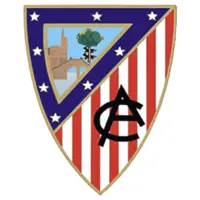
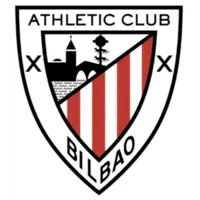
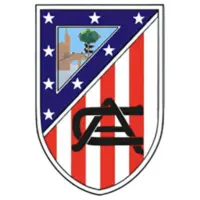
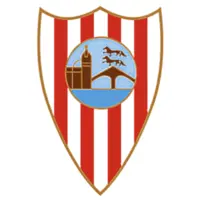
Historical Crests Athletic Bilbao
Name: Athletic Bilbao
Nickname(s): Lehoiak (The Lions)
Founded: 1898
Stadium: Estadio San Mamés (Bilbao)
Capacity: 53,289
Athletic Club Crest History
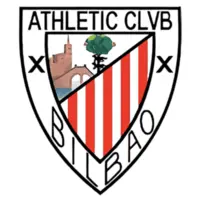
The badge of Athletic serves as a visual representation of the club’s deep connection to the city of Bilbao, the province of Biscay (Bizkaia) and the wider Basque Country. Throughout its history, the crest has evolved while consistently preserving the symbols that reflect the club’s heritage and identity.
The modern crest combines elements from the coats of arms of both Bilbao and Biscay. One of its most recognizable features is the Church of San Antón and the San Antón Bridge, taken directly from Bilbao’s municipal shield. These landmarks are among the city’s most iconic symbols and reflect Athletic’s close relationship with its hometown.
Another important element is the inclusion of the wolves of the Haro family, the medieval Lords of Biscay and founders of Bilbao. The wolves are a historic heraldic symbol associated with the Haro lineage and serve as a reminder of the region’s noble and cultural heritage.
The crest also incorporates references to the wider province of Biscay, including symbols associated with Basque history and identity. Together, these elements create a badge that tells the story of the club’s origins and its enduring relationship with the Basque people.
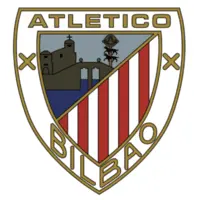
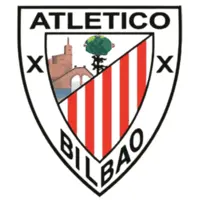
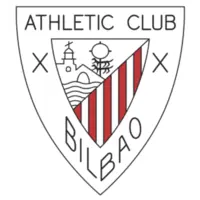
Throughout the twentieth century, Athletic Club made several refinements to its crest. While the overall design remained faithful to its historical foundations, adjustments were made to improve balance, clarity and reproduction on kits and official materials. Different versions featured variations in shield shape, colour tones and detailing, but the essential symbols remained intact.
The club’s identity was also influenced by political developments in Spain. During the regime of General Francisco Franco, the use of non-Spanish names was restricted. As a result, Athletic Club was required to adopt the Spanish form of its name and competed for a period as “Atlético Bilbao.” Despite this change, the club maintained its commitment to its traditions and local identity.
In 1972, Athletic restored its original English name, “Athletic Club,” reflecting the British influence that helped introduce football to Bilbao in the late nineteenth century. The return to the historic name was welcomed by supporters and reinforced the club’s unique place in Spanish football.
Since then, the crest has undergone only minor modernisations. Contemporary versions feature cleaner lines and improved proportions while preserving the bridge, church and wolves that have defined the badge for generations. The club has successfully balanced modern branding requirements with a strong commitment to its historical identity.
Athletic Club Club History
Founded in 1898 by a group of local football enthusiasts and British workers connected to Bilbao’s thriving industrial and shipping sectors, the club played a central role in the introduction and development of football in the Basque Country.
The club formally established itself in 1901 and quickly became one of the pioneers of Spanish football. Athletic was among the founding members of La Liga in 1929 and is one of only three clubs, alongside Real Madrid and Barcelona, that have never been relegated from Spain’s top division. This remarkable achievement has cemented Athletic’s status as one of the most respected institutions in European football.
Athletic Bilbao is affectionately known as “Los Leones” (“The Lions”). The nickname originates from the club’s historic home, San Mamés, which was built near the Church of San Mamés. Saint Mammes, after whom the church is named, was an early Christian martyr who, according to tradition, faced Roman lions but survived. The connection between the saint and the lions gave rise to one of the most famous nicknames in Spanish football.
The club’s identity is inseparable from its famous “cantera” policy. Athletic exclusively recruits players who were either born in the Basque Country or developed through Basque football academies. This philosophy, unique among Europe’s elite clubs, has become the cornerstone of Athletic’s identity and success. The club is widely regarded as one of football’s greatest developers of local talent and remains a symbol of Basque pride and culture.
Athletic plays its home matches at San Mamés, one of Spain’s most iconic football stadiums. The original San Mamés opened in 1913 and became known as “La Catedral” (“The Cathedral”) because of its importance in Spanish football. In 2013, Athletic moved into the new San Mamés, built adjacent to the original site, preserving the legacy of one of football’s most historic venues.
The club enjoyed significant success during the early decades of Spanish football, winning numerous Copa del Rey titles and establishing itself as one of the country’s dominant forces. Athletic was particularly successful during the 1930s and 1940s, producing many of Spain’s finest players and competing regularly for major honours.
Another golden era arrived during the 1980s under manager Javier Clemente. Athletic won consecutive La Liga titles in 1982–83 and 1983–84, before completing a famous domestic double by winning the Copa del Rey in 1984. These achievements remain among the greatest moments in the club’s history.
Athletic’s football legacy is also defined by its rivalries. The most famous is the Basque Derby against Real Sociedad, a fixture that showcases the passion, pride and footballing tradition of the Basque region. Although fiercely contested, the rivalry is often characterised by mutual respect between the two clubs and their supporters.
Athletic also maintains historic rivalries with Real Madrid and FC Barcelona. Encounters with Spain’s two most successful clubs have produced some of the most memorable matches in Spanish football history and add further prestige to Athletic’s story.
Athletic Club de Bilbao
Your Dynamic Snippet will be displayed here... This message is displayed because you did not provide enough options to retrieve its content.