Football shirts are more than sportswear. They remind us of players, stadiums, unforgettable matches and the moment we first fell in love with a club. A great shirt can represent a trophy-winning season, but it can just as easily become iconic through a striking design, a famous sponsor or one extraordinary afternoon.
The twelve shirts in this collection span more than two decades of English football. Some were worn while European Cups and league titles were lifted. Others belong to sides that narrowly missed out on glory or endured difficult seasons. Together, they show how football history can be told through colours, collars, patterns and sponsors.
Manchester United 1998–99: The Treble Shirt
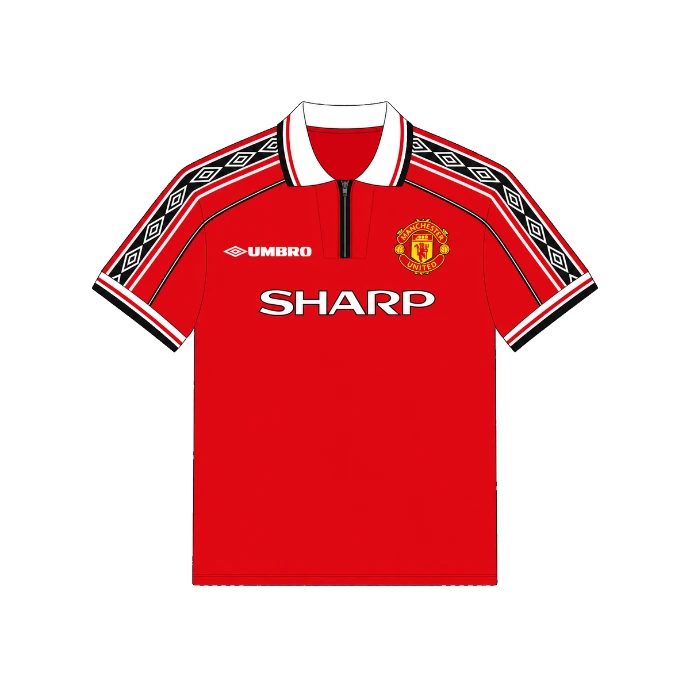
Few shirts are connected to as much success as Manchester United’s red home kit from 1998–99. Its zip-up collar, Umbro sleeve tape and large SHARP sponsor make it instantly recognisable, but the achievements of Sir Alex Ferguson’s team made it immortal.
United won the Premier League, FA Cup and UEFA Champions League in the same season. The campaign ended with the remarkable stoppage-time comeback against Bayern Munich in Barcelona, when goals from Teddy Sheringham and Ole Gunnar Solskjær completed the Treble. Beckham, Giggs, Scholes, Keane and the Class of ’92 ensured that this shirt would forever represent one of English football’s greatest teams.
Arsenal 1992–93: The Bruised Banana
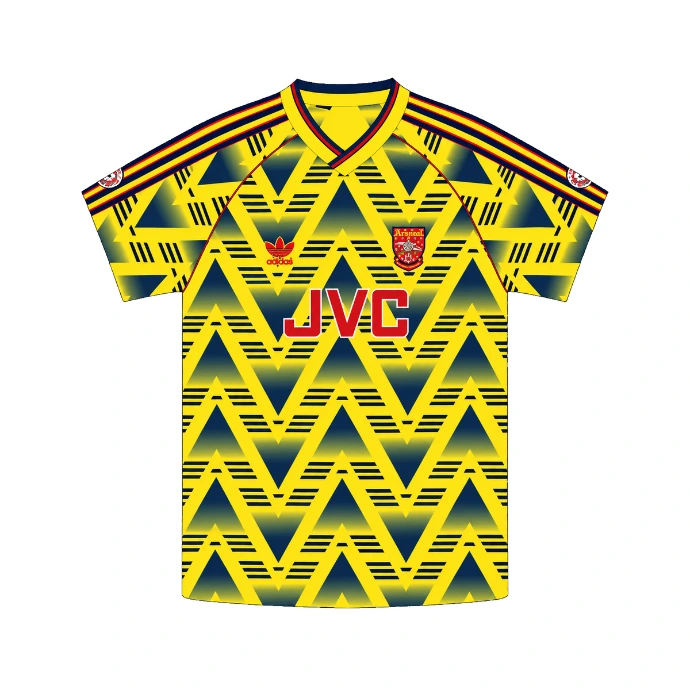
Arsenal’s yellow-and-navy away shirt is better known by its unforgettable nickname: the Bruised Banana. Adidas filled the design with a repeating zigzag pattern that looked radical in the early 1990s and remains unmistakable today.
The shirt was worn during a period of transition under George Graham. Arsenal finished only tenth in the league in 1992–93, yet won both the FA Cup and League Cup, defeating Sheffield Wednesday in both finals. Its cult status, however, is about more than results. The bold pattern, JVC sponsor and memories of players such as Tony Adams, Ian Wright and Paul Merson turned it into one of the most celebrated away shirts ever produced.
Liverpool 1989–90: The Last Title Before the Long Wait
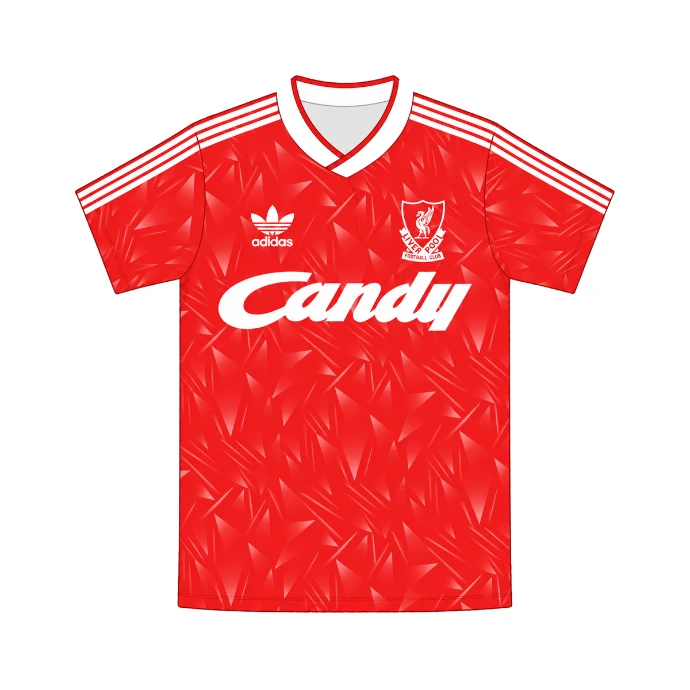
Liverpool’s 1989–90 home shirt combines everything associated with the club’s late-1980s dominance: bright red, three white Adidas stripes and the classic Candy sponsor. The subtle geometric pattern in the fabric gives the shirt an unmistakable period character.
Kenny Dalglish’s side won the First Division title with John Barnes, Peter Beardsley, Ian Rush and captain Alan Hansen among its leading figures. Nobody knew it at the time, but Liverpool would wait another thirty years before becoming champions of England again. That long gap added even greater historical importance to the final title shirt of the club’s original era of domestic dominance.
Newcastle United 1995–96: The Entertainers
Newcastle United did not win the Premier League in 1995–96, but few runners-up have been remembered with such affection. Kevin Keegan’s attacking side became known as The Entertainers, thrilling supporters with football built around Les Ferdinand, David Ginola, Peter Beardsley and Faustino Asprilla.
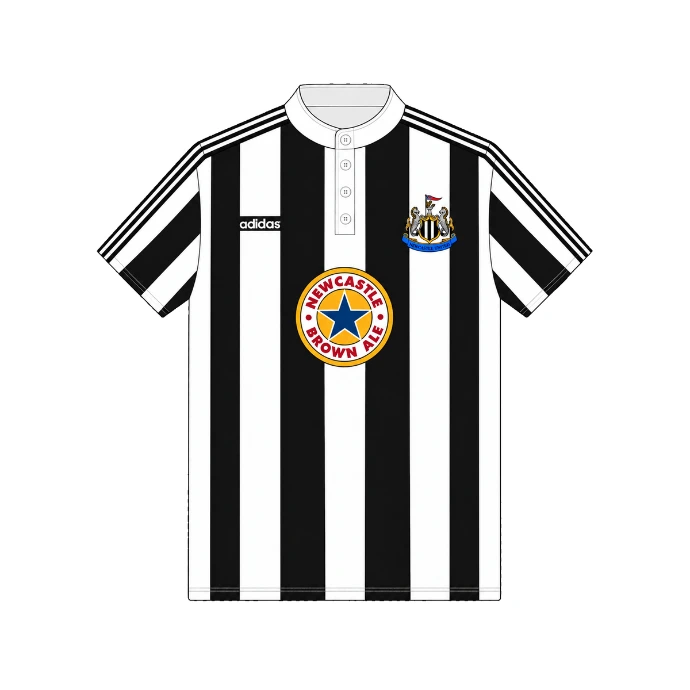
The black-and-white Adidas shirt, finished with a grandad collar and Newcastle Brown Ale sponsor, is inseparable from that team. Newcastle held a commanding lead during the season before Manchester United caught them, but the drama of the title race only strengthened the shirt’s legend. It represents excitement, ambition and a team that made neutral supporters stop and watch.
Manchester City 1998–99: From the Third Tier to a New Beginning
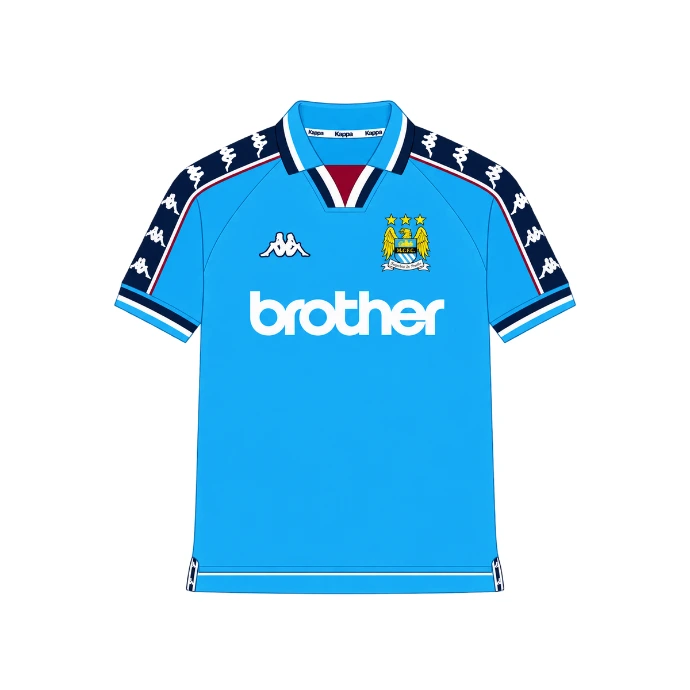
Manchester City’s sky-blue Kappa shirt comes from a very different chapter in the club’s history. In 1998–99, City were playing in the third tier of English football—an almost unimaginable position when viewed from the modern era.
The season ended at Wembley in the Second Division play-off final against Gillingham. With City trailing 2–0 as the match entered its final minutes, Kevin Horlock pulled one back before Paul Dickov scored a dramatic equaliser. City eventually won on penalties. The Brother-sponsored shirt has therefore become a symbol of survival and rebirth: the kit worn on the afternoon when the club’s long journey back towards the top truly began.
Aston Villa 1981–82: Champions of Europe
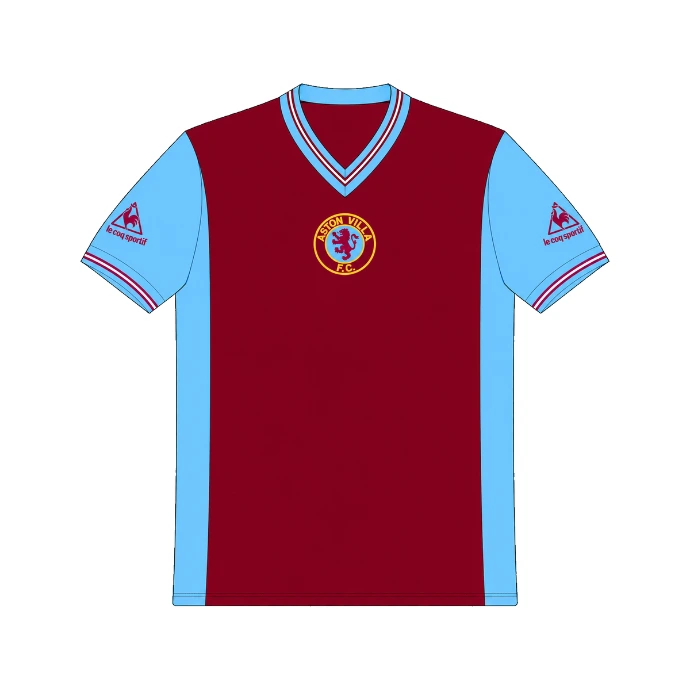
Aston Villa’s claret-and-blue Le Coq Sportif shirt is linked to the greatest night in the club’s history. Having qualified for the European Cup as English champions, Villa progressed to the 1982 final against Bayern Munich in Rotterdam.
Goalkeeper Jimmy Rimmer was forced off early through injury, leaving young substitute Nigel Spink to produce the performance of his life. Peter Withe then scored the only goal of the final from Tony Morley’s cross. Its clean design, unusual collar and minimal commercial clutter give the shirt a timeless appearance worthy of a European champion.
Nottingham Forest 1979–80: Back-to-Back European Glory
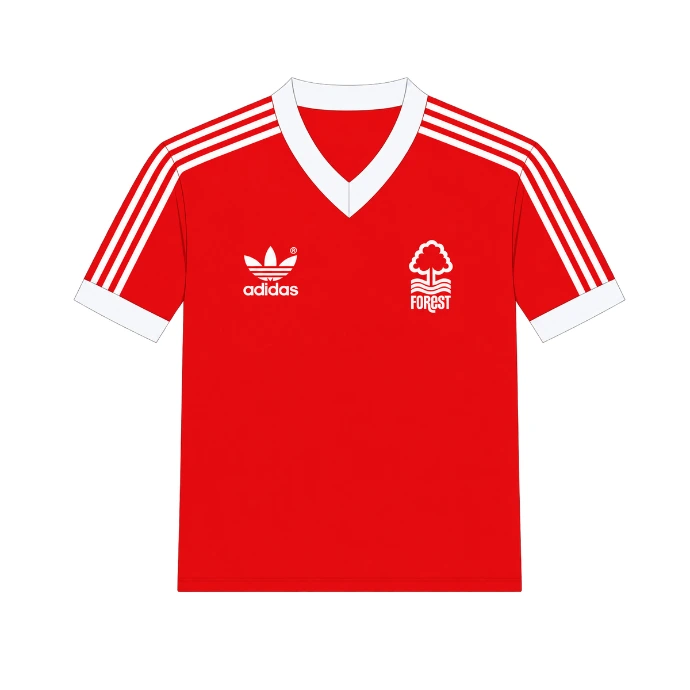
The late 1970s and early 1980s belonged to Brian Clough’s Nottingham Forest. After winning the European Cup in 1979, Forest successfully defended the trophy in 1980 by defeating Hamburg 1–0 in Madrid. John Robertson scored the decisive goal.
The red Adidas shirt is beautifully simple: white collar, white sleeve stripes, the treetop crest and no sponsor across the front. Forest’s achievement remains extraordinary. A club that had only recently returned to the First Division became English champion and then conquered Europe twice in succession. This shirt captures the confidence and clarity of that remarkable team.
Blackburn Rovers 1994–95: The Unlikely Premier League Champions
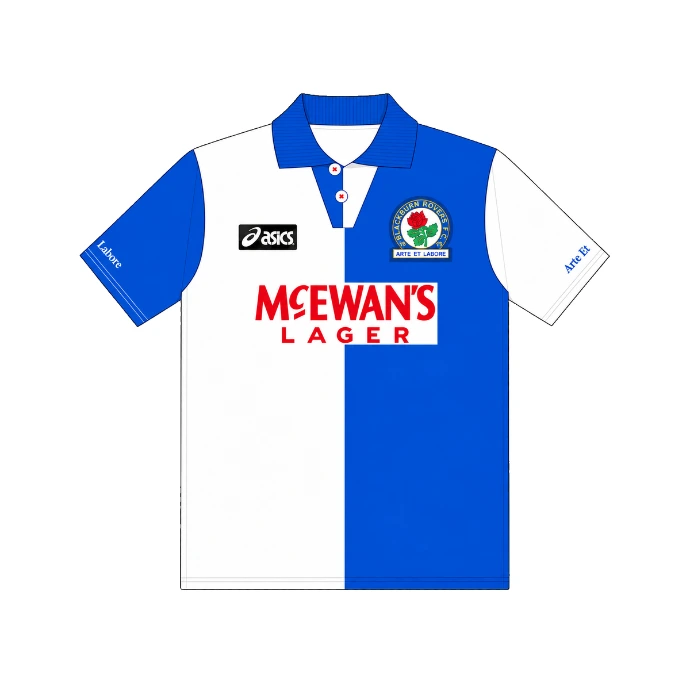
Blackburn Rovers’ blue-and-white halved shirt is one of the defining images of the early Premier League. Backed by lifelong supporter Jack Walker and managed by Kenny Dalglish, Rovers built a side capable of challenging Manchester United.
Alan Shearer and Chris Sutton supplied the goals, while captain Tim Sherwood lifted the trophy after a tense final day. Blackburn lost at Liverpool, but Manchester United’s draw at West Ham meant Rovers were champions for the first time in 81 years. The asymmetrical Asics design and McEwan’s Lager sponsor make this shirt inseparable from one of the competition’s most memorable title stories.
Chelsea 1997–98: A Cosmopolitan Cup Team
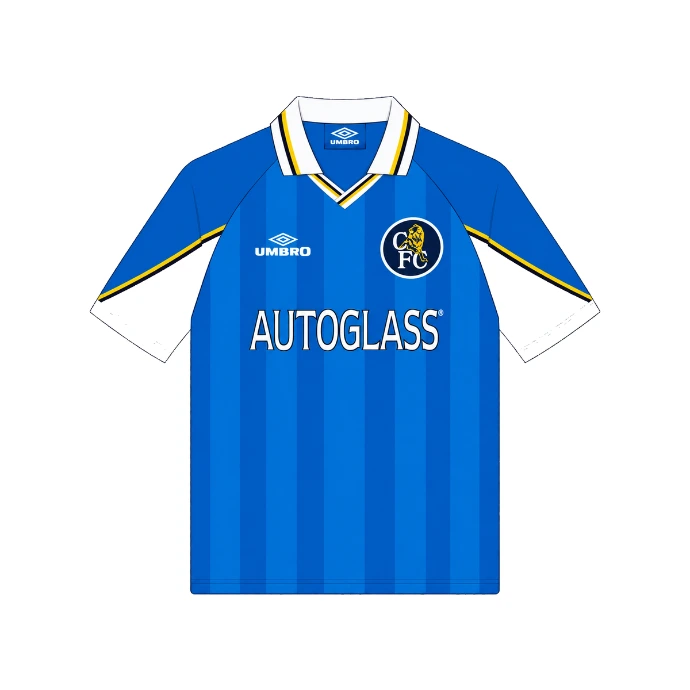
Chelsea’s 1997–98 shirt belongs to the years when the club was becoming one of English football’s most cosmopolitan teams. Gianluca Vialli, Gianfranco Zola, Roberto Di Matteo, Frank Leboeuf and Marcel Desailly helped give Stamford Bridge an increasingly international character.
Wearing this blue Umbro kit, Chelsea won the League Cup and UEFA Cup Winners’ Cup. Zola scored the winner against VfB Stuttgart in the European final only seconds after coming on as a substitute. The Autoglass sponsor, yellow trim and broad white sleeve panels give the shirt a look that could only have come from the late 1990s.
Tottenham Hotspur 1985–86: A North London Classic
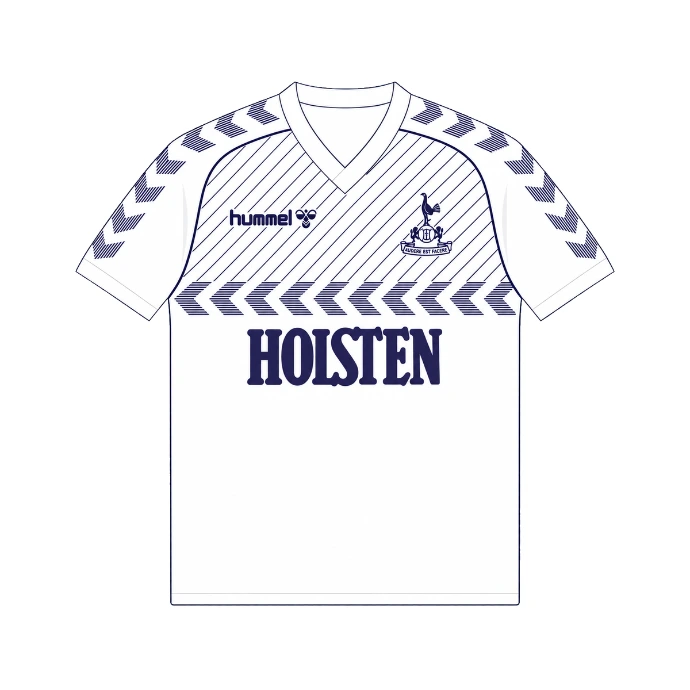
Tottenham’s white Hummel shirt from 1985–86 is remembered more for its design than for a trophy. The chevrons running across the shoulders and sleeves, combined with the navy Holsten sponsor, created one of the cleanest Spurs kits of the decade.
The season itself was difficult and brought a mid-table finish, yet that contrast is part of football-shirt culture: a design does not need to belong to a championship side to become loved. Worn by players including Glenn Hoddle, Chris Waddle and Clive Allen, this shirt evokes White Hart Lane and an era when Hummel’s bold visual identity became part of English football.
Leeds United 1992–93: Champions Brought Back to Earth
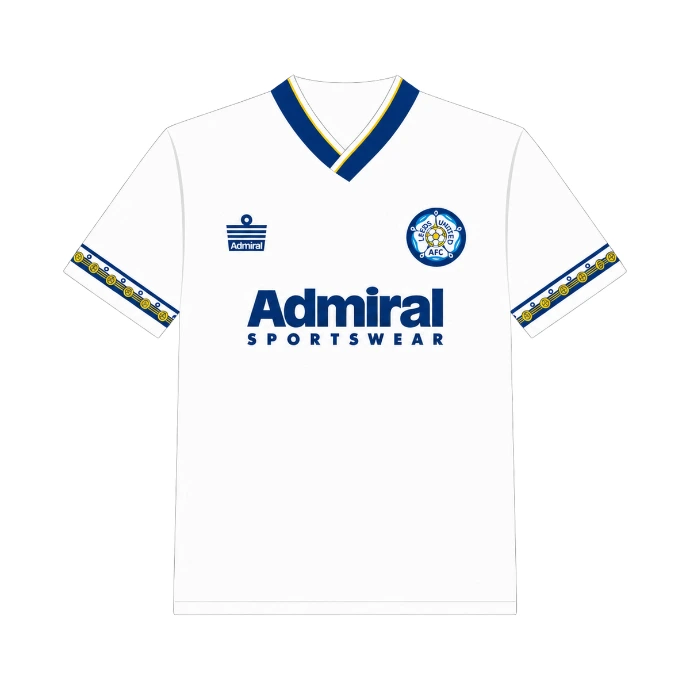
Leeds United began the first Premier League season as defending English champions. Their white Admiral shirt retained the club’s traditional simplicity but added distinctive blue-and-yellow trim and a bold central sponsor.
What followed was one of football’s strangest title defences. Howard Wilkinson’s side struggled badly away from Elland Road and finished seventeenth, only a year after becoming champions. That makes the shirt an interesting historical snapshot: it connects the glory of the final pre-Premier League championship with the harsh reality of the new competition. Sometimes an iconic shirt tells a story of change rather than triumph.
Coventry City 1977–78: Admiral Reinvents the Sky Blues
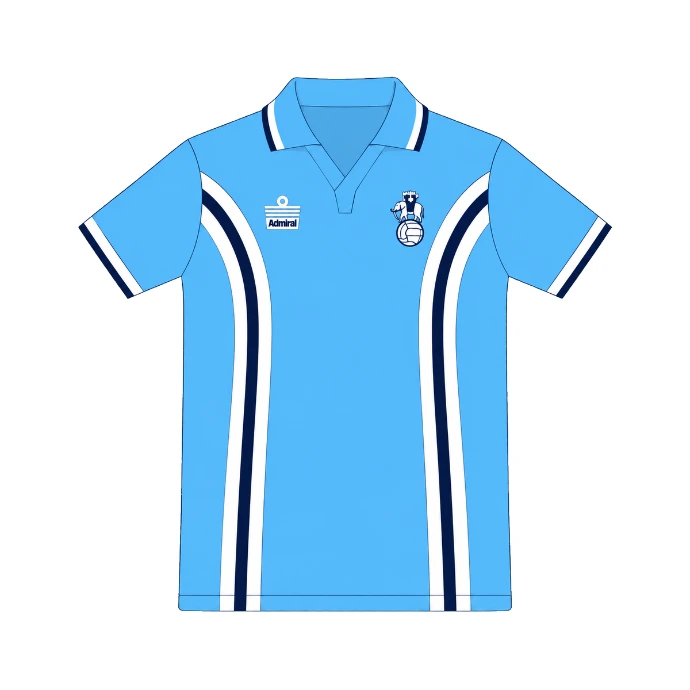
Coventry City became one of the most stylish sides in England during the Admiral era. The 1977–78 home shirt transformed the club’s familiar sky blue with dark blue and white stripes sweeping down the sides. It was a design that made the kit itself part of the club’s identity.
On the pitch, Coventry enjoyed an entertaining season under Gordon Milne. With Ian Wallace and Mick Ferguson leading the attack, the Sky Blues finished seventh in the First Division. The shirt captures a time when British manufacturers began treating football kits as bold pieces of graphic design rather than simple uniforms.
What Makes a Football Shirt Iconic?
There is no single formula. Manchester United’s shirt is remembered because it was worn during a Treble. Aston Villa and Nottingham Forest connect supporters to European glory. Manchester City’s shirt represents a miraculous escape, while Newcastle’s recalls a team that captured the imagination without winning the title.
Other shirts survive through design alone. Arsenal’s Bruised Banana was once outrageous and is now a classic. Coventry’s flowing stripes showed how adventurous kit design could be. Tottenham’s Hummel shirt remains popular even though the season produced no major trophy.
That is the beauty of collecting historic football shirts. Each one is a wearable archive. The colours and sponsors may catch the eye first, but it is the story behind the fabric that gives a shirt lasting value.
Which of these twelve shirts would you choose, and which English classic is missing from the list?